
☰
All servicesLocal SEOGBP managementAEO | GEOSEO contentTechnical SEOLink buildingDesign & CROPPC managementIndustriesLaw firmsHome servicesPlumbersHVACElectriciansRoofersMedical practicesOrthopedicsPhysical therapyDental practicesGeneral dentistsOrthodontistsPeriodontistsEndodontistsRestaurants and coffee shopsTour operatorsAuto repair shopsLocationsPennsylvaniaState CollegeBellefonteAltoonaWilliamsportLock HavenLewistownPhiladelphiaPittsburghAllentownHarrisburgNew YorkNew York CityBuffaloRochesterAlbanyTexasHoustonDallasSan AntonioAustinUtahSalt Lake CityProvoSt. GeorgeConnecticutBridgeportNew HavenHartfordStamfordOhioColumbusClevelandCincinnatiWashingtonSeattleSpokaneTacomaNevadaLas VegasRenoHendersonPackagesAboutResourcesArticles
Home / Locations / Pennsylvania / Dental practices / Local SEO
Local SEO for dental practices in Pennsylvania
Quick summary: Dental SEO in Pennsylvania runs on the same method as anywhere, with a state rule on top: the State Board of Dentistry's advertising regulation, which covers what a practice's website, Business Profile, and ads may claim. Galli Local is based in Bellefonte and works with Pennsylvania practices remotely. This page covers that rule, review replies, and how the state's markets differ. The general method is on our dental SEO page.
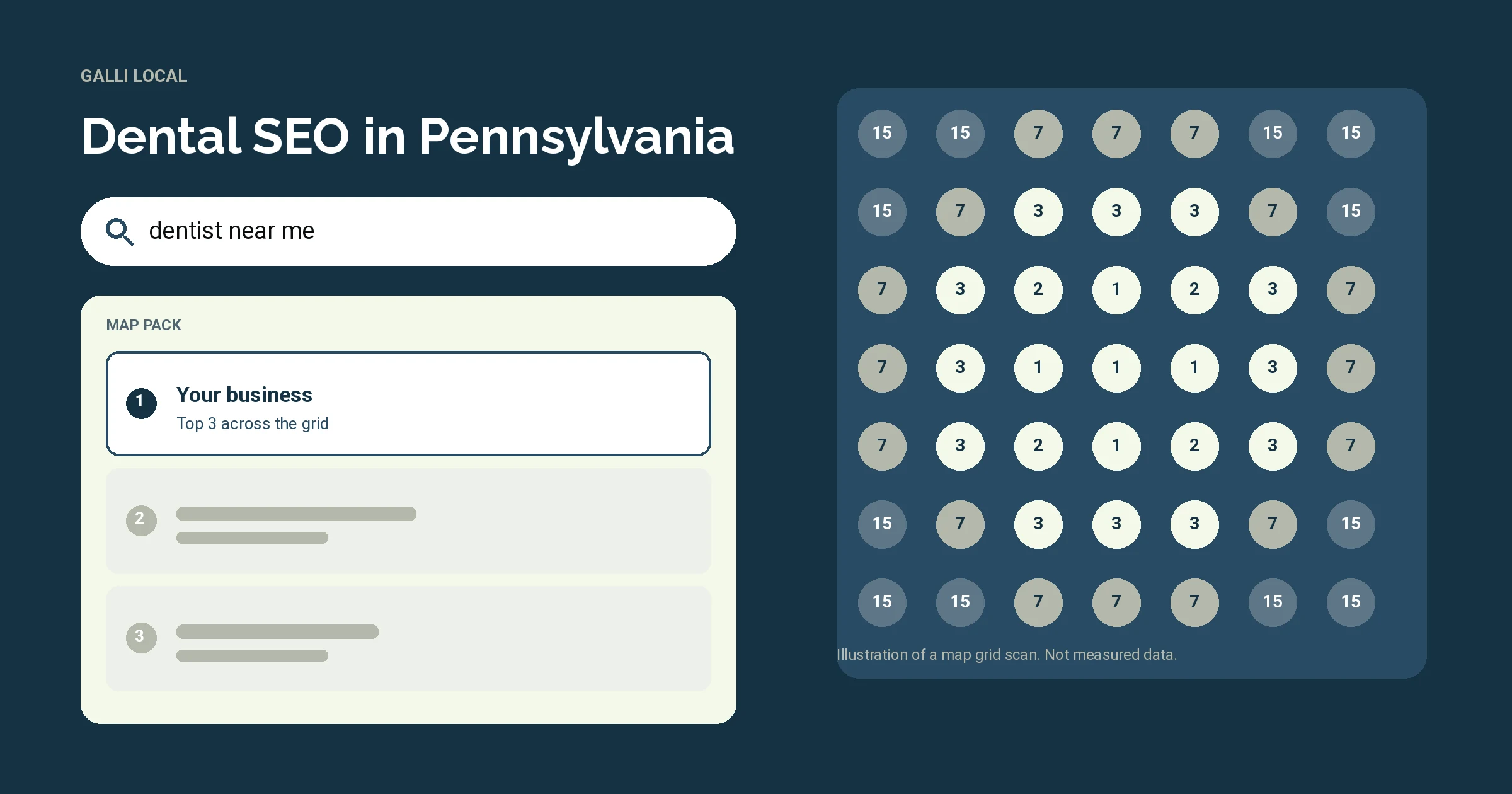
What local SEO covers for dental practices in Pennsylvania
Local SEO for dental practices in Pennsylvania is four jobs done every month: managing the Google Business Profile, earning and answering reviews, cleaning up citations and directory listings, and tracking rank on a map grid. In Pennsylvania, this page adds the local detail: the State Board of Dentistry's advertising rule, specialist claims, fee offers, and privacy-safe replies to patient reviews. The method itself, including categories, review rules and the directories that matter, is on our local SEO for dental practices page. The Local SEO program starts at $850/mo per location and needs a verified profile at a real address, at least 10 reviews and a 3.5-star or better rating.
What does Pennsylvania's dental advertising rule require?
The regulation defines advertising broadly. It lists signs, letterheads, business cards, and printed or broadcast announcements, and a website does the same job as any of them. Five parts of it matter for SEO.
Three of these catch practices that are otherwise careful.
Pages for services outside your specialty. A general dentist can offer implants, clear aligners, and root canals. Under part (d), the page should not suggest specialist status the dentist does not hold. A plain line does it: "Dr. [name] is a general dentist who provides implant treatment."
The new patient special. A "$99 exam and cleaning" in an ad is an advertised fee. It has to stay available for 60 days unless the ad states a shorter period, and if anything is described as free it must stay free. Before running a promotion in a Business Profile post or a Google ad, decide who honors it and for how long.
The practice name alone. A group practice or a branded name on a Business Profile is fine under Google's rules. The state rule still wants a dentist named in the advertising. Put the dentists' names on the home page and each landing page.
This is a summary, not legal advice. Read the current regulation before you publish.
How should a Pennsylvania practice reply to reviews?
A review reply is public, and patient privacy law applies to it even when the patient described the visit first. In June 2023 the federal Office for Civil Rights announced a $30,000 settlement with a practice that had disclosed a patient's protected health information when replying to a negative online review.
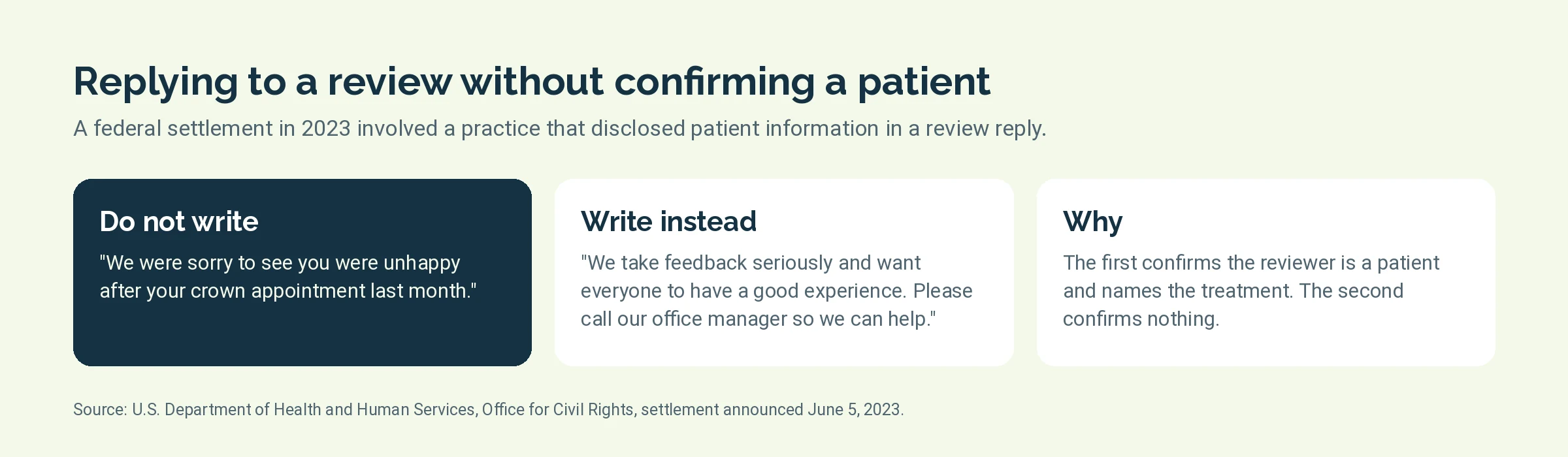
Write the policy down and train whoever answers reviews. Ask every patient for a review the same way, and offer nothing in return.
How do Pennsylvania's dental markets differ?
- Philadelphia. "Dentist philadelphia" gets about 1,000 searches a month and is rated hard to rank for. A practice competes by neighborhood, not across the city.
- Pittsburgh. "Dentist pittsburgh" gets about 700. Most patients live in the suburbs and search by their own borough or township.
- College towns. In State College, thousands of new students arrive each August and the campus health service lists no dental care. On October 5, 2026, the map pack for a general search and for an emergency search shared only one practice. See dental SEO in State College.
- Small towns. Fewer practices compete, so a complete profile and steady reviews go a long way. The limit is search volume.
Insurance matters everywhere in the state. Patients search by plan name, and insurer directories are often wrong after a move. Check each one.
The Local SEO program starts at $850/mo per location. It needs a verified Google Business Profile at a real physical address, at least 10 reviews, and a rating of 3.5 stars or better. See the Local SEO services page and the packages page. For the state as a whole, see local SEO in Pennsylvania.
Other search services for dental practices
- Digital marketing for dental practices: the hub for every service
- SEO for dental practices: content, technical work and links beyond the map
- AEO | GEO for dental practices: being named in AI answers
- SEO content for dental practices: service, area and FAQ pages
These three are national pages. For the wider picture in this market, see SEO services in Pennsylvania.
Common questions about dental SEO in Pennsylvania
Does a Pennsylvania dental ad have to name a dentist?
Yes. The State Board of Dentistry's advertising regulation requires an ad to identify at least one dentist by the name on the current license renewal.
Can a general dentist in Pennsylvania advertise implants or orthodontics?
Yes, but without implying specialist status. The regulation requires a general dentist who advertises a specialty area, such as orthodontics, to disclose that the services are provided by a general dentist.
How long must a Pennsylvania practice honor an advertised fee?
Sixty days, unless the ad states a shorter period. A service advertised as free also cannot be charged for later.
Can a practice reply to a negative Google review?
Yes, in general terms. The reply must not confirm the reviewer is a patient or mention any treatment.