
☰
All servicesLocal SEOGBP managementAEO | GEOSEO contentTechnical SEOLink buildingDesign & CROPPC managementIndustriesLaw firmsHome servicesPlumbersHVACElectriciansRoofersMedical practicesOrthopedicsPhysical therapyDental practicesGeneral dentistsOrthodontistsPeriodontistsEndodontistsRestaurants and coffee shopsTour operatorsAuto repair shopsLocationsPennsylvaniaState CollegeBellefonteAltoonaWilliamsportLock HavenLewistownPhiladelphiaPittsburghAllentownHarrisburgNew YorkNew York CityBuffaloRochesterAlbanyTexasHoustonDallasSan AntonioAustinUtahSalt Lake CityProvoSt. GeorgeConnecticutBridgeportNew HavenHartfordStamfordOhioColumbusClevelandCincinnatiWashingtonSeattleSpokaneTacomaNevadaLas VegasRenoHendersonPackagesAboutResourcesArticles
Home / Industries / Dental practices / SEO
SEO for dental practices
Quick summary: SEO for dental practices is the work of making the whole website rank and convert: procedure pages, cost and comparison pages, site speed, schema, links and AI answers. Local SEO is one part of it and covers the map pack. Full SEO is what wins the implant, Invisalign and cosmetic searches that land on web pages instead of map listings.
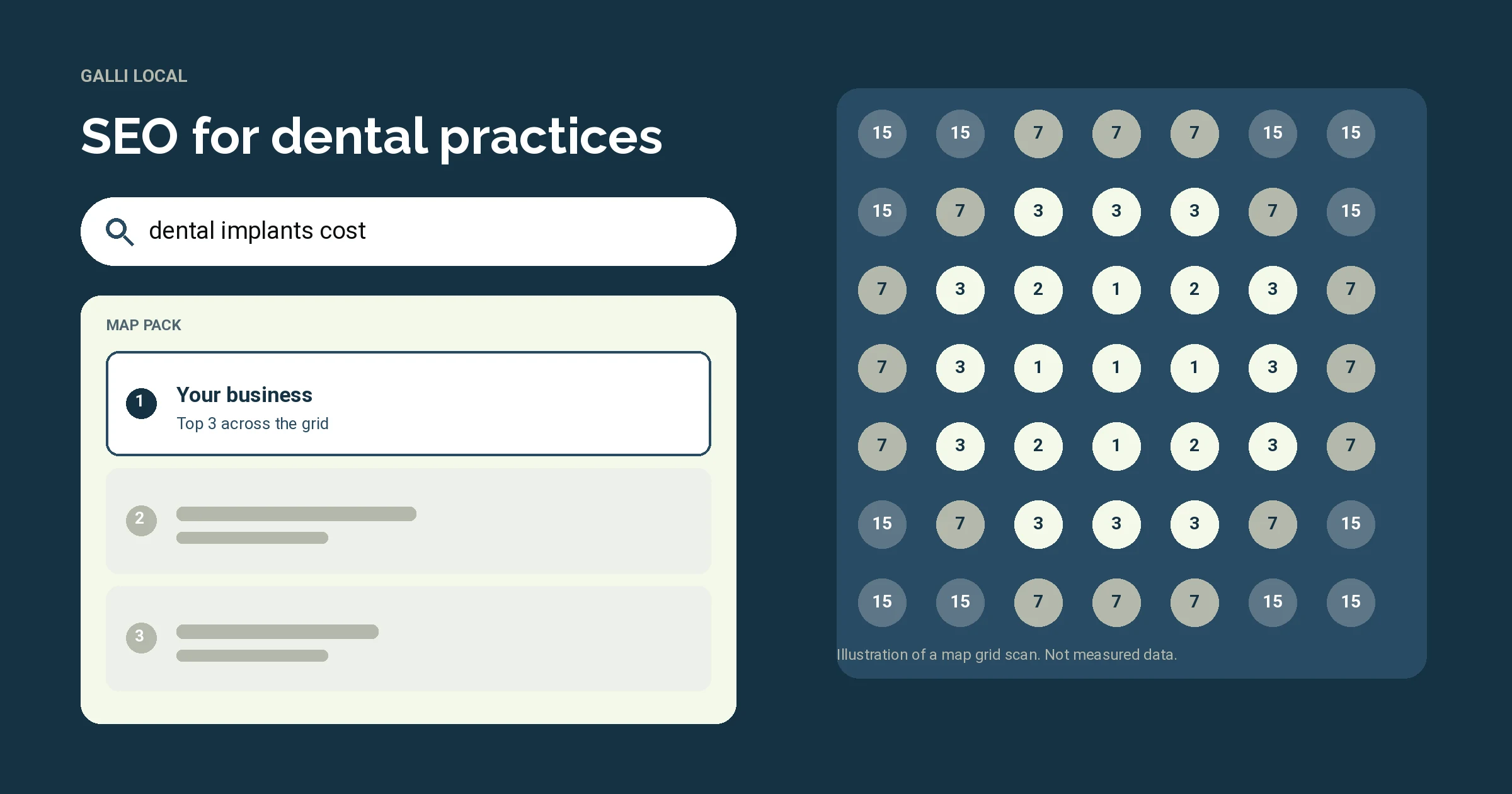
What does SEO cover for a dental practice?
SEO for a dental office has six parts. Most offices need the first two before the rest.
The national version of this service is on the SEO services page. The dental hub compares all four dental services side by side.
How do patients search beyond the map pack?
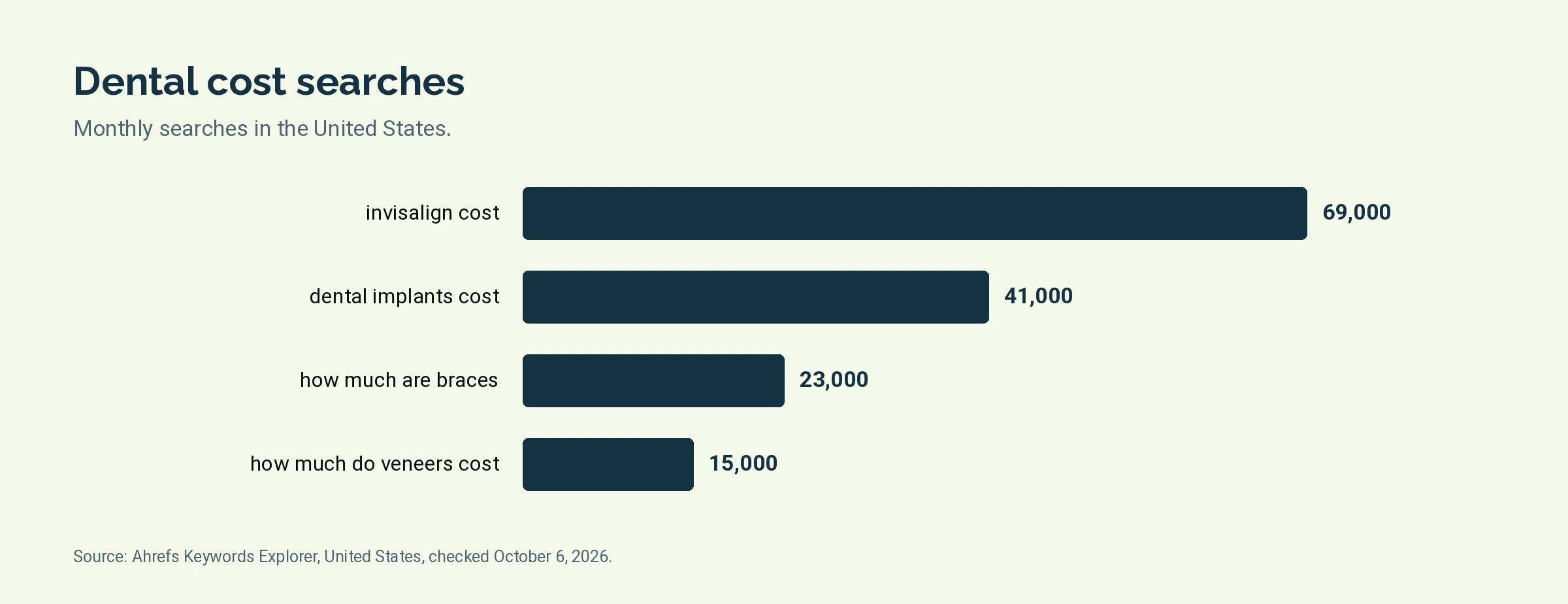
Patients who want a specific procedure search for the procedure, its price, and how it compares with the alternative. Those searches send clicks to web pages. The figures below are from Ahrefs Keywords Explorer for the United States.
Two things stand out. Cost searches are as large as service searches. "Invisalign cost" at about 69,000 searches a month is bigger than "cosmetic dentist near me" at about 39,000. And the national versions of these searches are mostly won by insurers, manufacturers and health publishers. In our experience a single office rarely outranks them nationally. It wins the local version: the patient in your town who adds a place name, or who gets a result set shaped by where they are standing. That takes a real page on your own site.
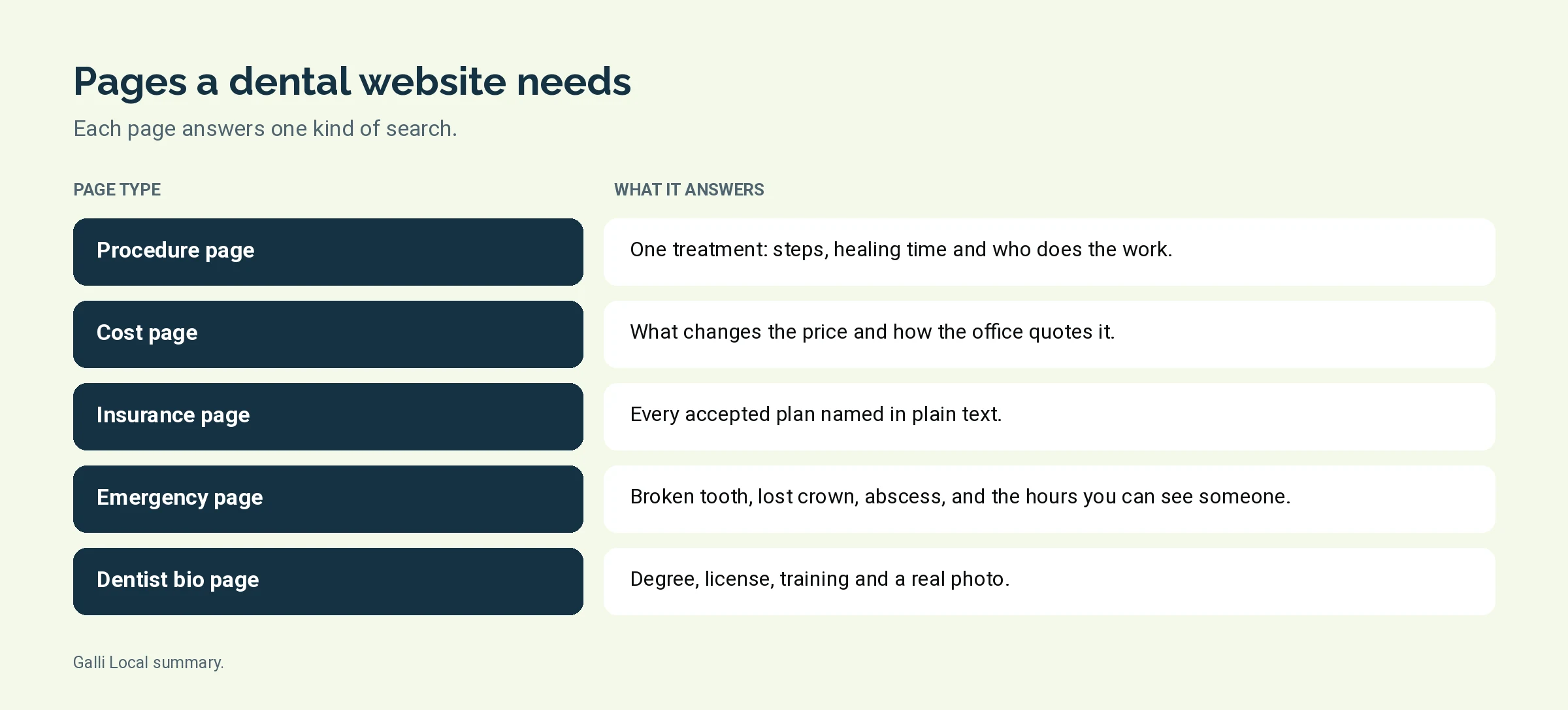
Which pages does a dental website need?
A dental website needs a page for every question a patient asks before booking. A single "Services" page with a paragraph per procedure cannot rank for any of them.
The content page covers how these get written and approved. Do not create one page per town with the town name swapped in. Google treats those as copies.
What technical work matters on a dental site?
Three technical points come up often on dental sites.
- Schema. Schema.org has a Dentist type, which sits under both LocalBusiness and MedicalOrganization. Use it on the office page with the name, address, hours and a medicalSpecialty value where one applies. Add FAQPage markup on pages with real questions and answers.
- Booking tools. Many offices embed a scheduler from their practice software or from Zocdoc. Text inside a framed widget may not count as part of your page, and a slow widget can delay the whole page. Keep the hours, services and insurance list in plain text on the page, and let the widget handle only the booking.
- Mobile speed. A patient with a toothache is on a phone. Large smile gallery photos and autoplay video are the usual cause of slow pages. Compress the photos and load the gallery after the main content.
One privacy point belongs here too. In guidance on online tracking technologies, the HHS Office for Civil Rights has said that a practice covered by HIPAA must not let tracking tools send protected health information to a vendor without the right agreement or authorization in place. A federal court in Texas set aside part of that guidance in 2024. Ask your attorney before adding ad pixels to booking or patient portal pages.
Where do links come from for a dental practice?
Good links for a dental office come from organizations that already know the practice exists.
- Professional bodies: the ADA Find-a-Dentist tool for members, your state dental association, and specialty groups such as the American Association of Orthodontists or the American Academy of Periodontology
- Insurers and platforms: every carrier directory you are in network with, Healthgrades, Zocdoc and Yelp
- Suppliers and brands: provider locators run by aligner or implant brands you are certified with
- Community: the chamber of commerce, schools and youth teams you sponsor, and free care days such as the ADA Foundation's Give Kids A Smile program
- Local press: a new associate, a new office or a charity day is a story a local paper will run
We do not buy links or place them on networks of unrelated blogs.
Which rules apply to dental marketing?
Three sets of rules shape what a dental site can say. This is general information, not legal advice.
- Advertising. The ADA's code of conduct says no dentist shall advertise in a way that is false or misleading in any material respect, and its section 5.H covers who may announce a specialty. The code binds ADA members. Your state dental board sets the rules that carry legal force, and they differ by state.
- Privacy. HIPAA applies to patient photos, testimonials and review replies. Using a patient's photo or story in marketing generally needs a signed authorization under the HIPAA Privacy Rule.
- Reviews. The HHS Office for Civil Rights fined a North Carolina dental practice $50,000 in 2022 and settled with a California practice for $23,000 the same year, both over patient information disclosed in replies to online reviews. A reply must never confirm that the reviewer is a patient.
Profile categories, review requests and directory cleanup are covered in full on the local SEO page, so they are not repeated here.
How long does dental SEO take?
Expect different clocks for different parts. First map grid movement usually shows in 1 to 3 weeks, and a top 3 spot on competitive terms takes 30 to 90 days. SEO content takes 3 to 6 months for steady gains. Ads bring leads from the day campaigns go live, which is why some offices run them while the organic work builds.
Is full SEO a good fit for your practice?
A good fit if you
- Already hold a map pack spot near the office and want more implant, orthodontic or cosmetic cases
- Have procedures with no page of their own
- Have a dentist who will review pages for accuracy before they publish
- Can give it at least three months
Not a fit yet if you
- Have an unverified Business Profile or fewer than 10 reviews. Start with local SEO.
- Want pages published without clinical review
- Need a full schedule this month. Ads are the faster tool for that.
Questions dental practices ask about SEO
What is the difference between local SEO and SEO for a dental practice?
Local SEO targets the map pack near your office. SEO covers the whole website: procedure pages, cost pages, speed, schema and links. Most offices need local SEO first and add the rest when they want specific procedures.
How much does dental SEO cost?
The Local SEO program starts at $850/mo per location. Full SEO is part of the full agency stack and depends on how many pages and how much technical work the site needs. Current options are on the packages page.
Can a single office rank for "dental implants cost"?
Rarely for the national search, which large publishers and insurers hold. An office can rank for the local version when it has a clear, honest cost page and a strong local profile.
Should we put prices on our website?
That is your call and your state board's rules apply. Many offices publish a range and explain what moves the price, which answers the search without quoting a fee that may not fit the patient.
Do we need a separate website for each location?
No. One site with a full page for each office is easier to maintain and concentrates links in one place. Each office page needs its own address, hours, dentists and photos.
Will you guarantee first-page rankings?
No. We do not guarantee rankings, leads or AI mentions. We report what changed each month and what it did to calls and bookings.