
☰
All servicesLocal SEOGBP managementAEO | GEOSEO contentTechnical SEOLink buildingDesign & CROPPC managementIndustriesLaw firmsHome servicesPlumbersHVACElectriciansRoofersMedical practicesOrthopedicsPhysical therapyDental practicesGeneral dentistsOrthodontistsPeriodontistsEndodontistsRestaurants and coffee shopsTour operatorsAuto repair shopsLocationsPennsylvaniaState CollegeBellefonteAltoonaWilliamsportLock HavenLewistownPhiladelphiaPittsburghAllentownHarrisburgNew YorkNew York CityBuffaloRochesterAlbanyTexasHoustonDallasSan AntonioAustinUtahSalt Lake CityProvoSt. GeorgeConnecticutBridgeportNew HavenHartfordStamfordOhioColumbusClevelandCincinnatiWashingtonSeattleSpokaneTacomaNevadaLas VegasRenoHendersonPackagesAboutResourcesArticles
Home / Locations / Utah / Dental practices / Local SEO
Local SEO for dental practices in Utah
Quick summary: Dental SEO in Utah turns on two lines in the state dental practice act. One requires a prominent disclaimer when a general dentist advertises a specialty area. The other treats an unsubstantiated claim of superior training or skill as unprofessional conduct. Galli Local is based in Bellefonte, Pennsylvania, and works with Utah businesses remotely. The general method is on our dental SEO page.
What local SEO covers for dental practices in Utah
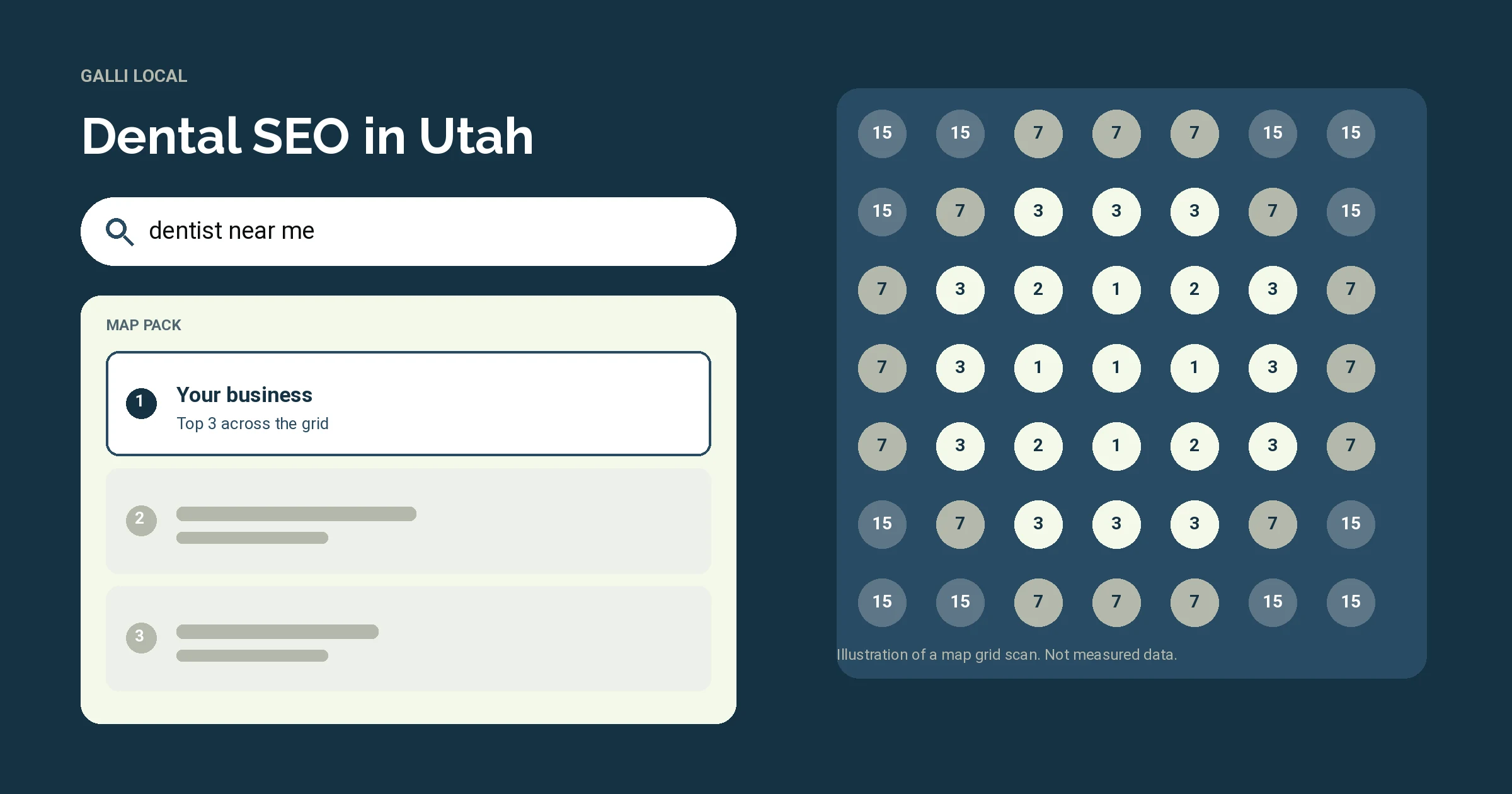
Local SEO for dental practices in Utah is four jobs done every month: managing the Google Business Profile, earning and answering reviews, cleaning up citations and directory listings, and tracking rank on a map grid. In Utah, this page adds the local detail: the general dentist disclaimer for specialty services, the rule against superiority claims, paid referrals, and where the demand is. The method itself, including categories, review rules and the directories that matter, is on our local SEO for dental practices page. The Local SEO program starts at $850/mo per location and needs a verified profile at a real address, at least 10 reviews and a 3.5-star or better rating.
What does Utah law say about dental advertising?
Section 58-69-502 of the Utah Code and the licensing rule under it set four limits that apply to a website or an ad.
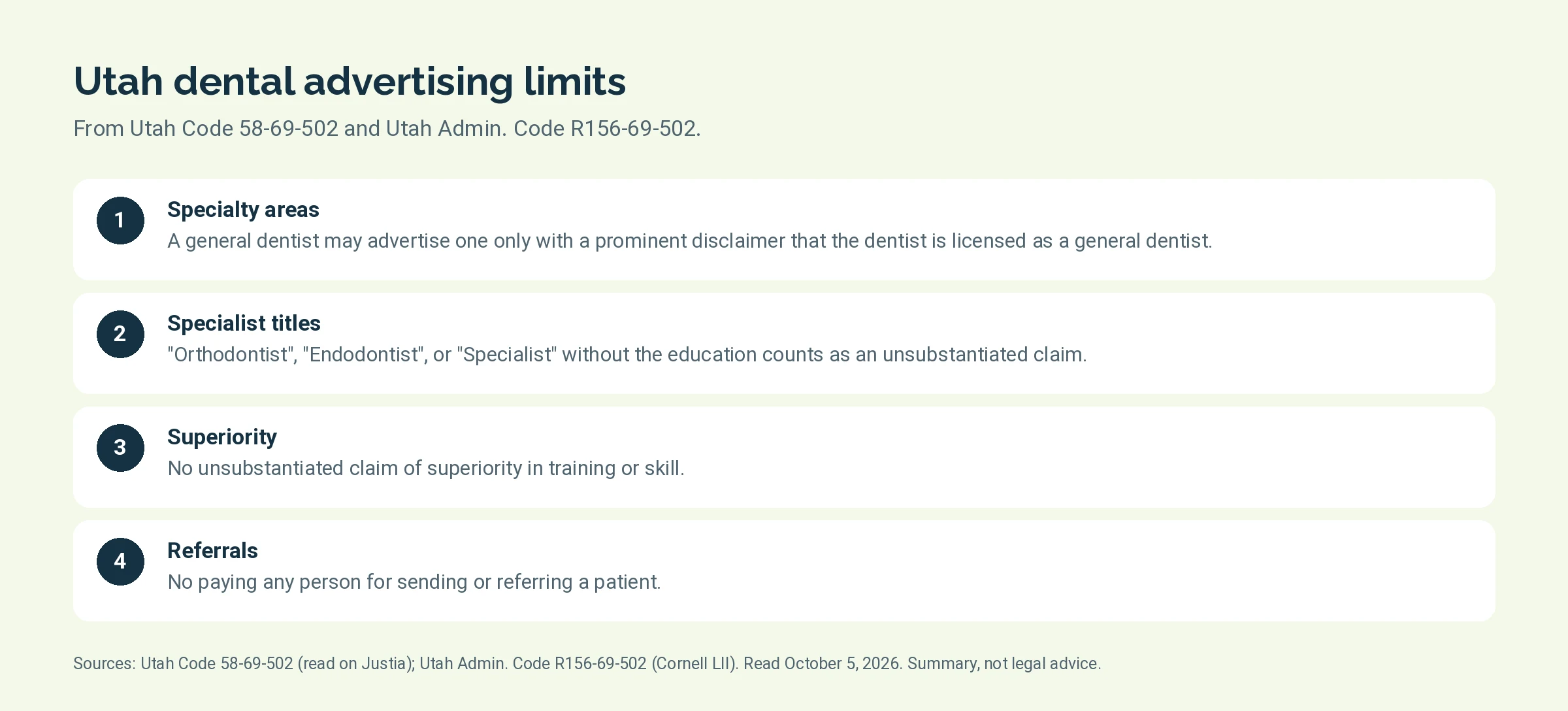
The disclaimer has to be prominent. A line in the footer does not meet a rule that asks for prominence. On a page about braces or implants, put "licensed as a general dentist" near the top, close to the dentist's name.
Categories are advertising. Google's "Orthodontist" and "Endodontist" categories are titles. Use them only for a dentist with the specialty education. A general practice uses "Dentist" and lists the services.
Referral rewards are a risk. "Refer a friend and get $50" pays a person for referring a patient. Ask counsel before running one. Asking patients for reviews, with nothing offered, is a different thing and is fine.
Review replies. Federal privacy law applies in Utah as everywhere. In October 2019 the federal Office for Civil Rights announced a $10,000 settlement with a Dallas practice over patient information disclosed on social media. A reply must never confirm that the reviewer is a patient.
This is a summary, not legal advice. Read the current rule before you publish.
How do Utah's dental markets differ?
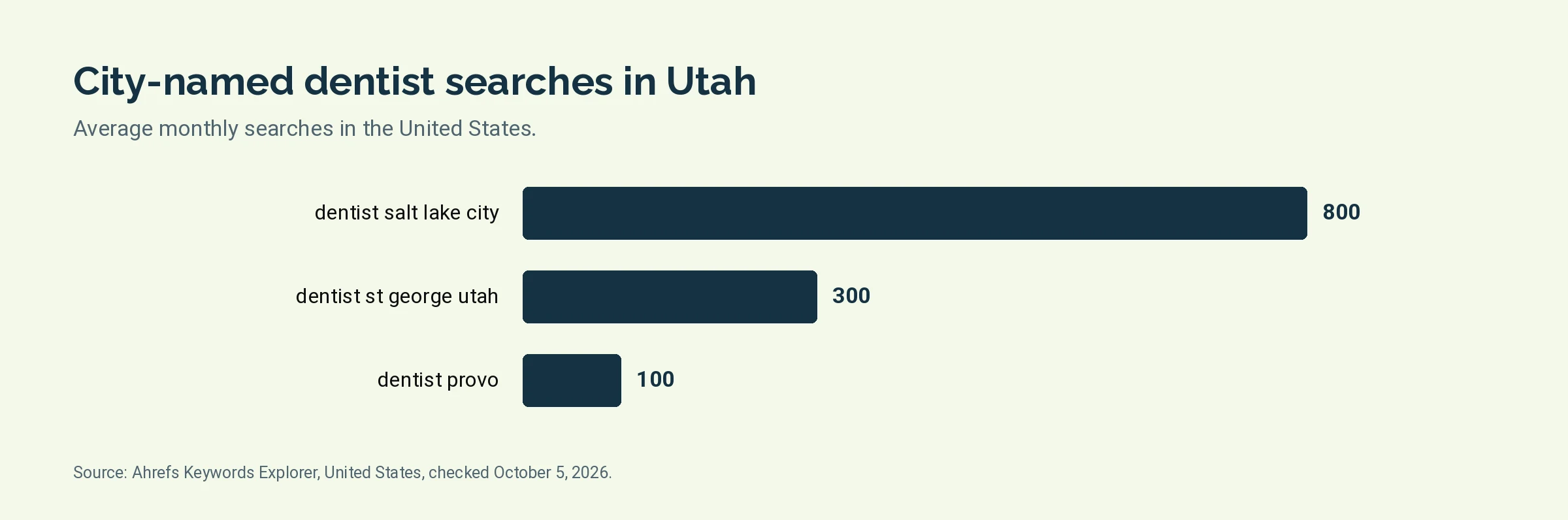
"Dentist salt lake city" gets about 800 searches a month in the United States, "dentist st george utah" about 300, and "dentist provo" about 100. Ahrefs rates them 59, 58, and 53 out of 100 for difficulty, which is high for the two smaller cities.
- Salt Lake Valley. Most patients live in the suburbs and search by their own city.
- Provo and Orem. A median age of 23.8 in Provo. Students and young families want evening hours and clear pricing for the uninsured.
- St. George. New residents arrive every year with no dentist. Recent reviews decide who they call.
See our pages for Salt Lake City, Provo, and St. George.
What should a Utah practice check this month?
- Does every specialty service page carry a prominent general dentist disclaimer?
- Do titles and categories match each dentist's education?
- Can you substantiate every "best" or "advanced" claim?
- Do you pay anyone for referrals?
- Do review replies avoid confirming anyone is a patient?
The Local SEO program starts at $850/mo per location. It needs a verified Google Business Profile at a real physical address, at least 10 reviews, and a rating of 3.5 stars or better. See the Local SEO services page and the packages page. For the state as a whole, see local SEO in Utah.
Other search services for dental practices
- Digital marketing for dental practices: the hub for every service
- SEO for dental practices: content, technical work and links beyond the map
- AEO | GEO for dental practices: being named in AI answers
- SEO content for dental practices: service, area and FAQ pages
These three are national pages. For the wider picture in this market, see SEO services in Utah.
Common questions about dental SEO in Utah
Can a general dentist in Utah advertise orthodontics?
Yes, with a prominent disclaimer that the dentist is licensed as a general dentist. Check the current statute and rule.
Can a Utah practice pay for patient referrals?
State law lists paying any person for sending or referring a patient as unprofessional conduct. Ask counsel before offering referral rewards.
Can a Utah dentist claim to be the best?
An unsubstantiated claim of superiority in training or skill is unprofessional conduct. Use facts you can support.
Can a practice reply to a Google review?
Yes, in general terms. The reply must not confirm the reviewer is a patient or mention treatment.
How long does local SEO take for a Utah practice?
First map grid movement usually shows in 1 to 3 weeks. Reaching the top 3 on competitive terms takes 30 to 90 days, depending on reviews and nearby competition.