
☰
All servicesLocal SEOGBP managementAEO | GEOSEO contentTechnical SEOLink buildingDesign & CROPPC managementIndustriesLaw firmsHome servicesPlumbersHVACElectriciansRoofersMedical practicesOrthopedicsPhysical therapyDental practicesGeneral dentistsOrthodontistsPeriodontistsEndodontistsRestaurants and coffee shopsTour operatorsAuto repair shopsLocationsPennsylvaniaState CollegeBellefonteAltoonaWilliamsportLock HavenLewistownPhiladelphiaPittsburghAllentownHarrisburgNew YorkNew York CityBuffaloRochesterAlbanyTexasHoustonDallasSan AntonioAustinUtahSalt Lake CityProvoSt. GeorgeConnecticutBridgeportNew HavenHartfordStamfordOhioColumbusClevelandCincinnatiWashingtonSeattleSpokaneTacomaNevadaLas VegasRenoHendersonPackagesAboutResourcesArticles
Home / Locations / Texas / Medical practices / Local SEO
Local SEO for medical practices in Texas
Quick summary: Medical practice SEO in Texas follows the Texas Medical Board's advertising rules, which define advertising broadly, hold the physician responsible for every ad, and set conditions on testimonials and board certification claims. Galli Local is based in Bellefonte, Pennsylvania, and works with Texas businesses remotely. The general method is on our medical practice SEO page.
What local SEO covers for medical practices in Texas
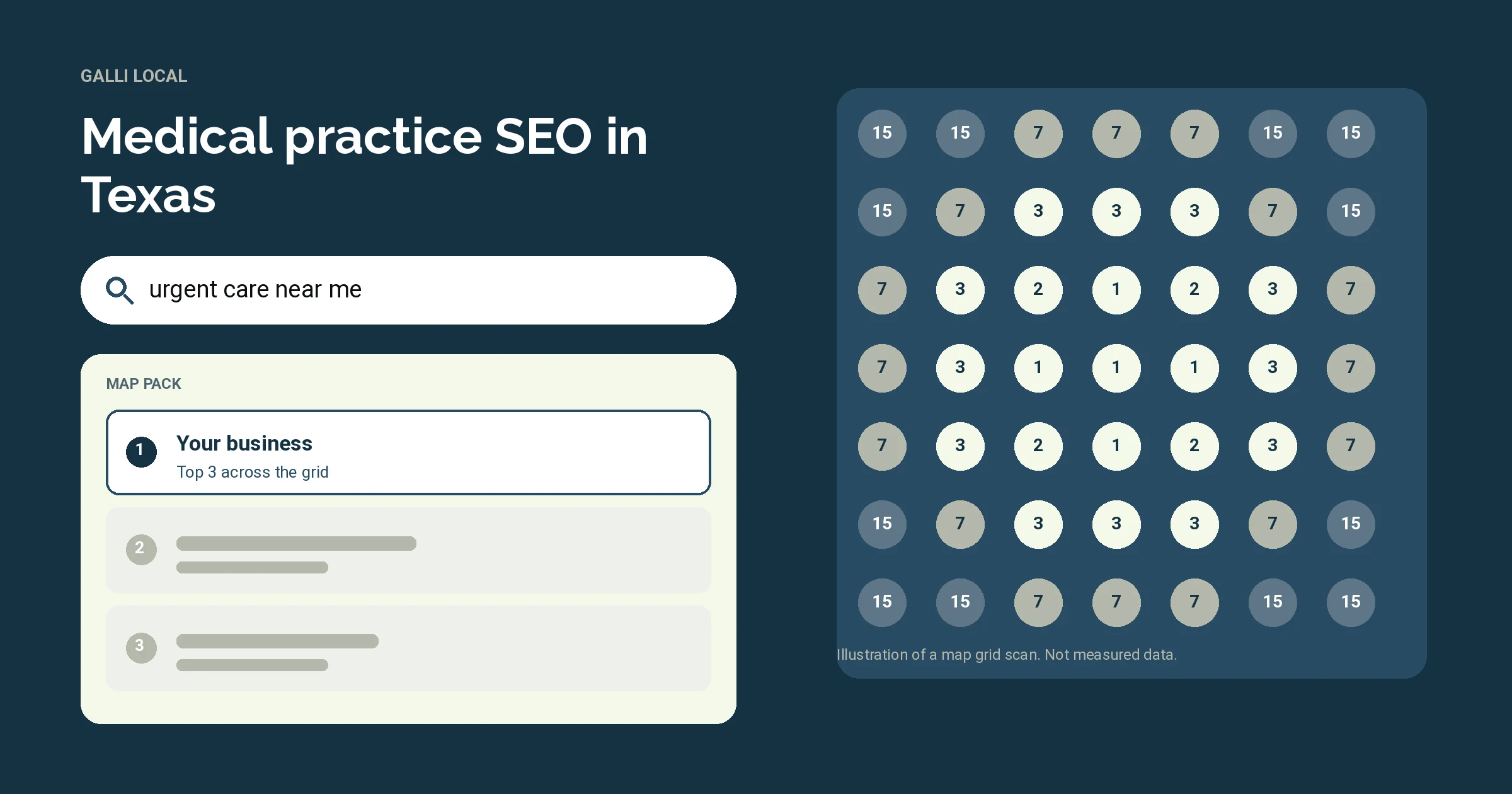
Local SEO for medical practices in Texas is four jobs done every month: managing the Google Business Profile, earning and answering reviews, cleaning up citations and directory listings, and tracking rank on a map grid. In Texas, this page adds the local detail: Texas Medical Board rules on patient testimonials, board certification claims, and keeping copies of every ad for two years. The method itself, including categories, review rules and the directories that matter, is on our local SEO for medical practices page. The Local SEO program starts at $850/mo per location and needs a verified profile at a real address, at least 10 reviews and a 3.5-star or better rating.
What do the Texas Medical Board's advertising rules require?
The rules are in Title 22 of the Texas Administrative Code, chapter 164. The current version took effect January 9, 2025.
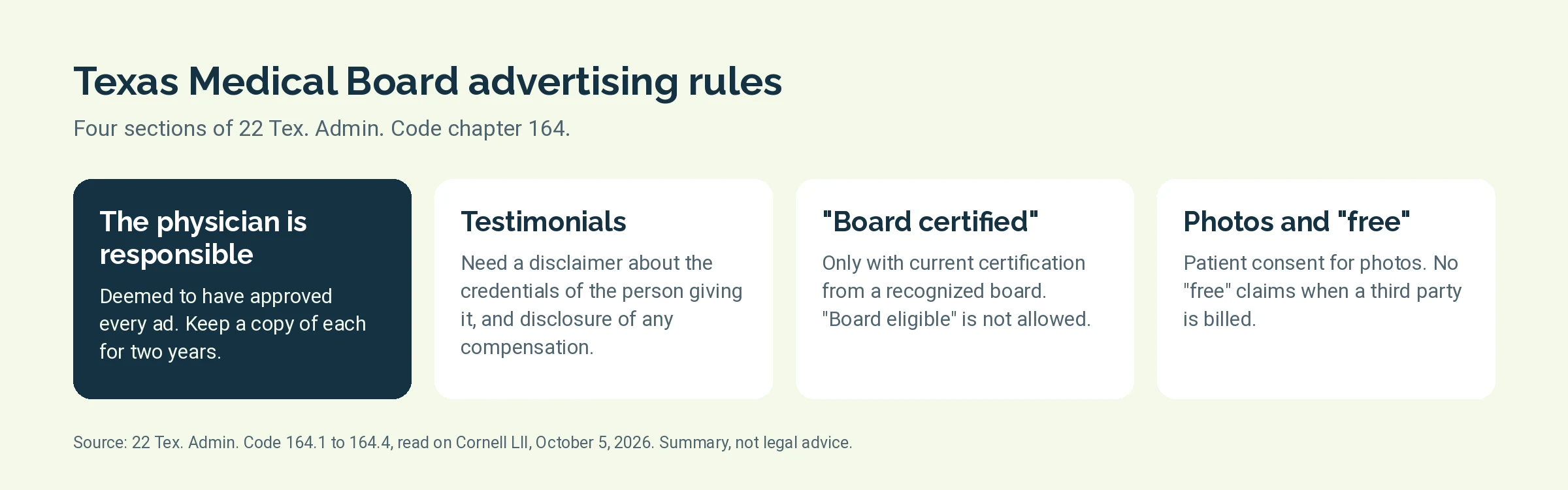
The doctor answers for what an agency writes. Under section 164.2 the physician is deemed to have approved every ad. Set up a sign-off step: nothing goes live on the site or the profile until a physician has read it.
Stock photos need a label. If a page shows a model, the rule says the model must be identified as a non-patient. A short caption does it.
Check every bio. "Board eligible" appears on many physician bios written years ago, and on directory profiles nobody has updated. Search your own site and the major directories for the phrase and remove it.
Photos need consent. Before-and-after galleries rank well in image search, and each photo needs the patient's consent on file.
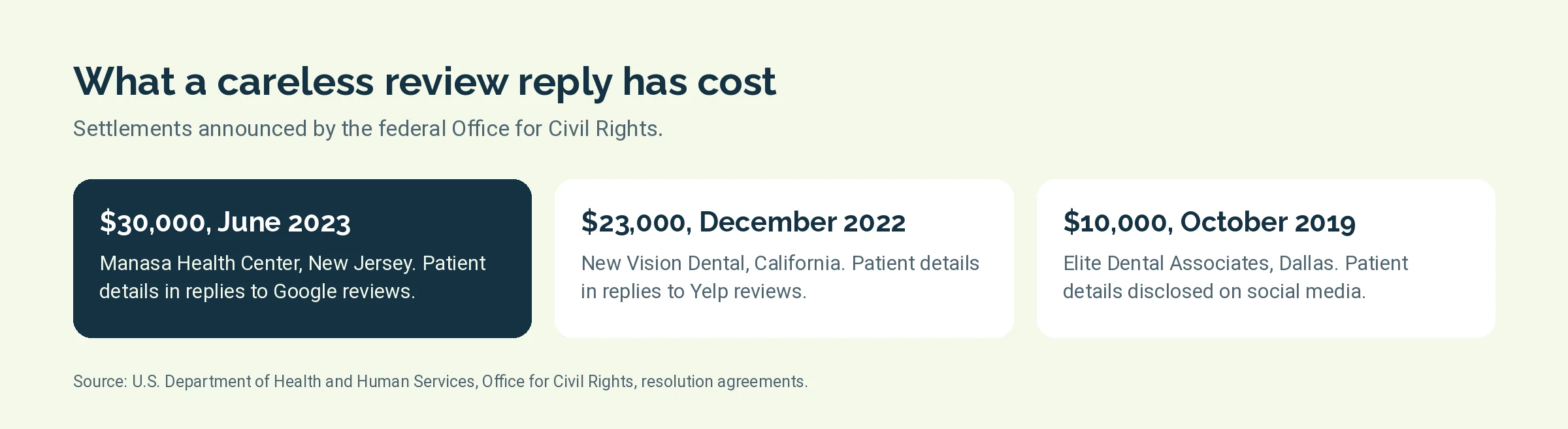
Review replies. The federal Office for Civil Rights has settled several cases over review replies, including $30,000 with Manasa Health Center in June 2023. A reply must never confirm that the reviewer is a patient or mention care.
This is a summary, not legal advice. Read the current rule before you publish.
How do Texas markets differ for medical practices?
"Urgent care houston" gets about 1,400 searches a month in the United States.
- Houston. 2,304,580 residents and a very large medical district. Independent practices rank in the suburbs where patients live, not near the hospitals.
- Dallas-Fort Worth. Two cities and dozens of suburbs. Choose the suburbs within a 15-minute drive and build pages for those.
- San Antonio, Austin, El Paso. One office can reach more of the city. Bilingual pages are worth writing where your patients need them.
Across all of them, patients search without a city name and pick from the map. The specific primary category for your specialty and a steady flow of reviews on the profile do most of the work.
What should a Texas practice check this month?
- Has a physician approved every page and post?
- Are you keeping two years of ad copies?
- Does any bio say "board eligible" or "board qualified"?
- Are models in photos labeled as non-patients?
- Do review replies avoid confirming anyone is a patient?
The Local SEO program starts at $850/mo per location. It needs a verified Google Business Profile at a real physical address, at least 10 reviews, and a rating of 3.5 stars or better. See the Local SEO services page and the packages page. For the state as a whole, see local SEO in Texas.
Other search services for medical practices
- Digital marketing for medical practices: the hub for every service
- SEO for medical practices: content, technical work and links beyond the map
- AEO | GEO for medical practices: being named in AI answers
- SEO content for medical practices: service, area and FAQ pages
These three are national pages. For the wider picture in this market, see SEO services in Texas.
Common questions about medical practice SEO in Texas
Can a Texas physician use patient testimonials?
Yes, with conditions. The rules call for a disclaimer about the credentials of the person giving the testimonial and disclosure of any compensation. Check the current rule.
Can a Texas doctor say "board eligible"?
No. The Texas Medical Board rules prohibit "board eligible" and "board qualified" in advertising.
Who is responsible for a practice's ads in Texas?
The physician. The rules deem the physician to have approved all advertising, including what an agency writes.
How long must a Texas practice keep its ads?
Two years from the last communication.
How long does local SEO take for a Texas practice?
First map grid movement usually shows in 1 to 3 weeks. Reaching the top 3 on competitive terms takes 30 to 90 days, depending on reviews and nearby competition.