
☰
All servicesLocal SEOGBP managementAEO | GEOSEO contentTechnical SEOLink buildingDesign & CROPPC managementIndustriesLaw firmsHome servicesPlumbersHVACElectriciansRoofersMedical practicesOrthopedicsPhysical therapyDental practicesGeneral dentistsOrthodontistsPeriodontistsEndodontistsRestaurants and coffee shopsTour operatorsAuto repair shopsLocationsPennsylvaniaState CollegeBellefonteAltoonaWilliamsportLock HavenLewistownPhiladelphiaPittsburghAllentownHarrisburgNew YorkNew York CityBuffaloRochesterAlbanyTexasHoustonDallasSan AntonioAustinUtahSalt Lake CityProvoSt. GeorgeConnecticutBridgeportNew HavenHartfordStamfordOhioColumbusClevelandCincinnatiWashingtonSeattleSpokaneTacomaNevadaLas VegasRenoHendersonPackagesAboutResourcesArticles
Home / Locations / Utah / Medical practices / Local SEO
Local SEO for medical practices in Utah
Quick summary: Medical practice SEO in Utah has one rule that touches every page: an advertisement that names a health care provider must identify the type of license that provider practices under. The law counts websites as advertisements. Galli Local is based in Bellefonte, Pennsylvania, and works with Utah businesses remotely. The general method is on our medical practice SEO page.
What local SEO covers for medical practices in Utah
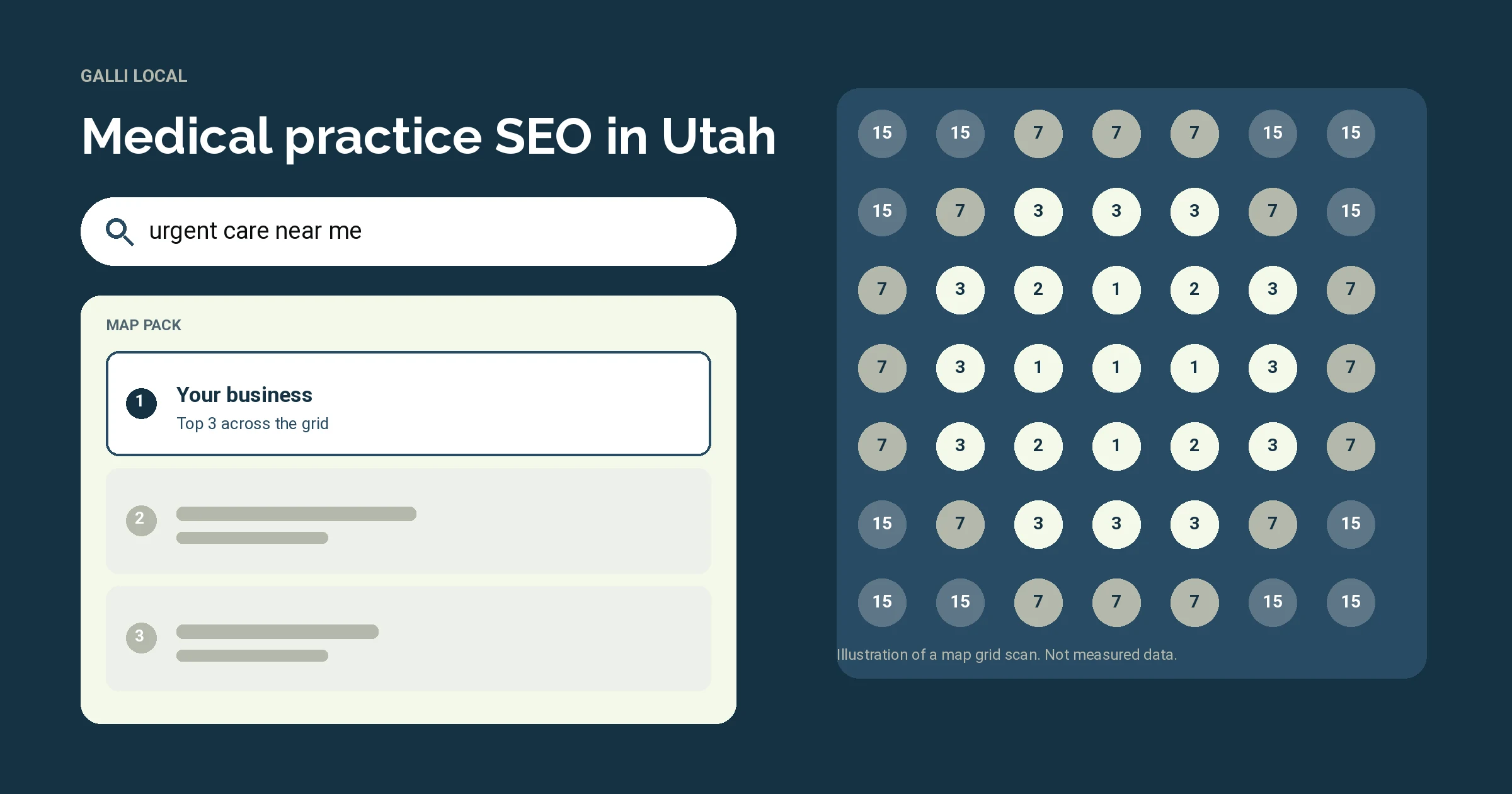
Local SEO for medical practices in Utah is four jobs done every month: managing the Google Business Profile, earning and answering reviews, cleaning up citations and directory listings, and tracking rank on a map grid. In Utah, this page adds the local detail: the law that requires every ad naming a provider to state the license type, what counts as an ad, and where the demand is. The method itself, including categories, review rules and the directories that matter, is on our local SEO for medical practices page. The Local SEO program starts at $850/mo per location and needs a verified profile at a real address, at least 10 reviews and a 3.5-star or better rating.
What does Utah require in a health care advertisement?
Section 58-1-501.6 of the Utah Code has applied to advertisements since July 1, 2011. A violation is unprofessional conduct.
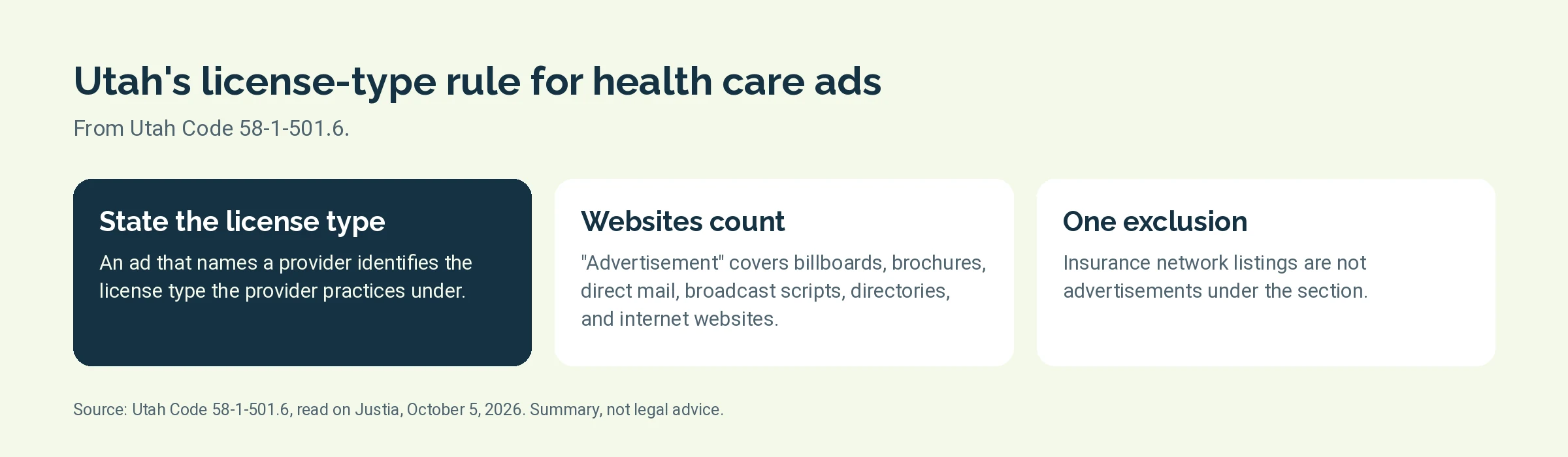
Audit every page that names a person. Team pages usually comply. Blog posts, service pages, and landing pages often say "Dr. Smith" or "Sarah, our provider" with no license type. Add it at first mention: "Sarah Jones, PA-C" or "John Smith, MD".
Mid-level providers are where sites slip. Urgent care and dermatology practices rely on physician assistants and nurse practitioners. The rule exists so a patient knows who they will see. Stating it plainly also helps AI tools, which look for named, credentialed people.
The practice act adds little on advertising. False claims about licensure are covered there, and the general consumer protection laws still apply.
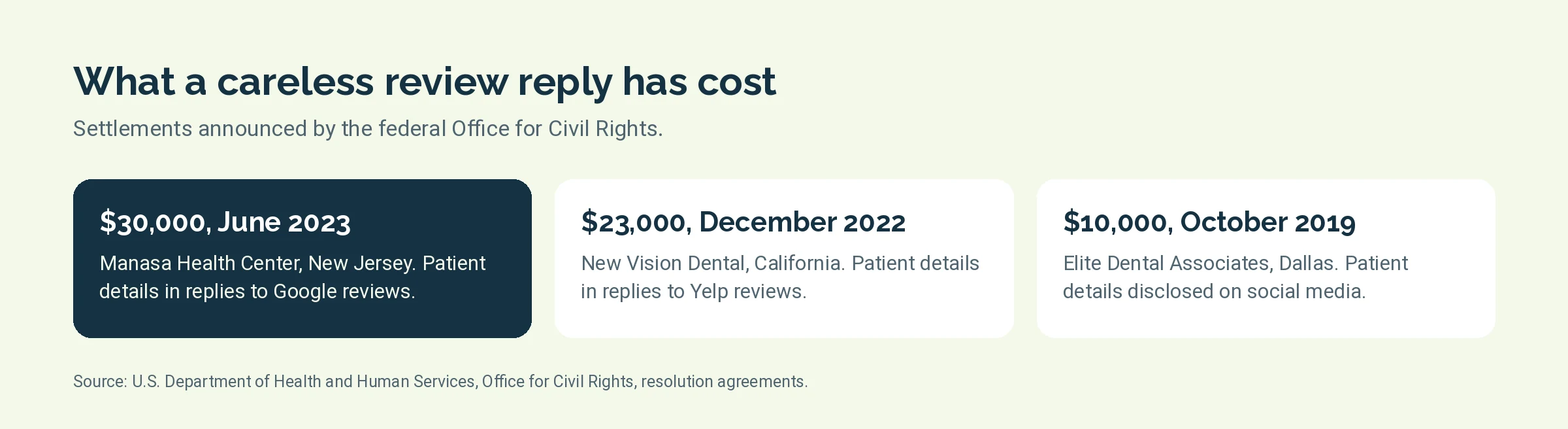
Review replies. In June 2023 the federal Office for Civil Rights announced a $30,000 settlement with a New Jersey practice over patient details in replies to Google reviews. A reply must never confirm that the reviewer is a patient.
This is a summary, not legal advice. Read the current rule before you publish.
How do Utah's markets differ for medical practices?
"Dermatologist salt lake city" gets about 600 searches a month in the United States and "urgent care salt lake city" about 450. Ahrefs rates them 38 and 35 out of 100 for difficulty.
- Salt Lake Valley. Intermountain Health and the University of Utah anchor the market. Independents rank in the suburbs.
- Utah County. Utah Valley Regional Medical Center was among Provo's top employers in 2019. Young families drive pediatric and urgent care searches.
- St. George. The regional hospital is described as the only 24-hour trauma center between Las Vegas and the Wasatch Front. Retirees and visitors add demand for urgent care and specialists.
See our pages for Salt Lake City, Provo, and St. George.
What should a Utah practice check this month?
- Does every page that names a provider state the license type?
- Do paid ads and Business Profile text do the same?
- Are physician assistants and nurse practitioners identified as such?
- Can you support every claim on the site?
- Do review replies avoid confirming anyone is a patient?
The Local SEO program starts at $850/mo per location. It needs a verified Google Business Profile at a real physical address, at least 10 reviews, and a rating of 3.5 stars or better. See the Local SEO services page and the packages page. For the state as a whole, see local SEO in Utah.
Other search services for medical practices
- Digital marketing for medical practices: the hub for every service
- SEO for medical practices: content, technical work and links beyond the map
- AEO | GEO for medical practices: being named in AI answers
- SEO content for medical practices: service, area and FAQ pages
These three are national pages. For the wider picture in this market, see SEO services in Utah.
Common questions about medical practice SEO in Utah
Does a Utah medical ad have to state the provider's license type?
Yes. Under Utah Code 58-1-501.6, an advertisement that names a health care provider must identify the license type under which the provider practices.
Does a practice website count as an advertisement in Utah?
Yes. The section lists internet websites along with billboards, brochures, direct mail, and directories.
Are insurance directory listings covered?
No. Insurance network listings are excluded from the definition.
Can a practice reply to a negative review?
Yes, in general terms. Do not confirm the person is a patient or mention any detail of care.
How long does local SEO take for a Utah practice?
First map grid movement usually shows in 1 to 3 weeks. Reaching the top 3 on competitive terms takes 30 to 90 days, depending on reviews and nearby competition.