
☰
All servicesLocal SEOGBP managementAEO | GEOSEO contentTechnical SEOLink buildingDesign & CROPPC managementIndustriesLaw firmsHome servicesPlumbersHVACElectriciansRoofersMedical practicesOrthopedicsPhysical therapyDental practicesGeneral dentistsOrthodontistsPeriodontistsEndodontistsRestaurants and coffee shopsTour operatorsAuto repair shopsLocationsPennsylvaniaState CollegeBellefonteAltoonaWilliamsportLock HavenLewistownPhiladelphiaPittsburghAllentownHarrisburgNew YorkNew York CityBuffaloRochesterAlbanyTexasHoustonDallasSan AntonioAustinUtahSalt Lake CityProvoSt. GeorgeConnecticutBridgeportNew HavenHartfordStamfordOhioColumbusClevelandCincinnatiWashingtonSeattleSpokaneTacomaNevadaLas VegasRenoHendersonPackagesAboutResourcesArticles
Home / Locations / Utah / Law firms / Local SEO
Local SEO for law firms in Utah
Quick summary: Law firm SEO in Utah works under some of the lightest advertising rules in the country. In 2020 the Utah Supreme Court repealed Rules 7.2 through 7.5 and left a single rule: do not be false or misleading. The same reforms let new kinds of legal providers into the market. Galli Local is based in Bellefonte, Pennsylvania, and works with Utah businesses remotely. The general method is on our law firm SEO page.
What local SEO covers for law firms in Utah
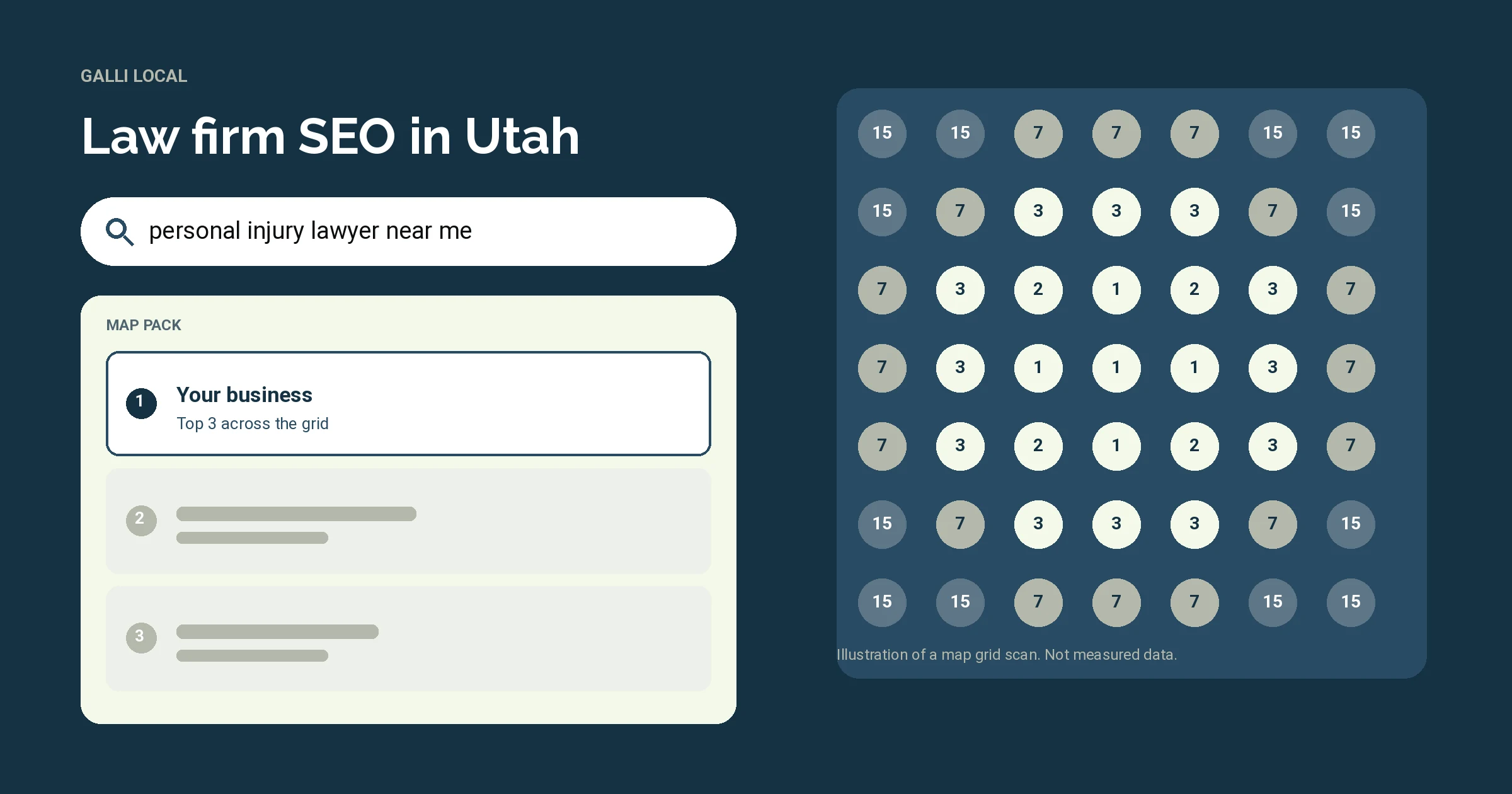
Local SEO for law firms in Utah is four jobs done every month: managing the Google Business Profile, earning and answering reviews, cleaning up citations and directory listings, and tracking rank on a map grid. In Utah, this page adds the local detail: one advertising rule instead of five, fee sharing with nonlawyers, licensed paralegal practitioners, and how the markets differ. The method itself, including categories, review rules and the directories that matter, is on our local SEO for law firms page. The Local SEO program starts at $850/mo per location and needs a verified profile at a real address, at least 10 reviews and a 3.5-star or better rating.
What do Utah's rules require of a law firm's marketing?
Four things changed in or after 2020, and each affects how a firm competes online.
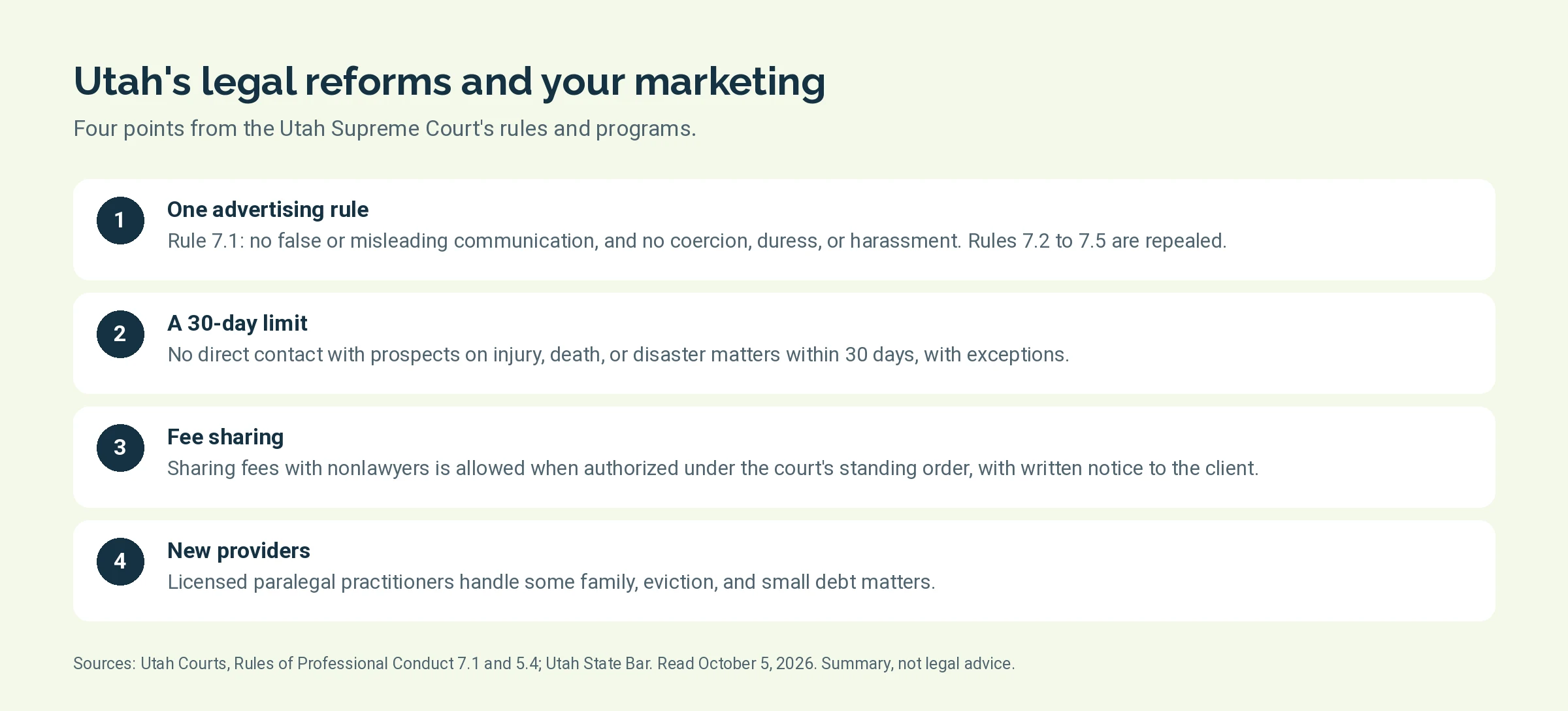
Fewer rules means the claim itself is the whole test. With no specific rule on testimonials, results, or specialist wording, each statement is judged on whether it is false or misleading. Case results still need context. "Specialist" still has to be true.
The sandbox is closing to new entrants. The court's Office of Legal Services Innovation oversees nontraditional providers. Its site says the program is authorized through August 14, 2027 and is no longer accepting applications. Providers already inside it still compete for clients online.
Paralegal practitioners target the same searches as family lawyers. Divorce, custody, and eviction searches now return providers who are not attorneys. A family law firm should say plainly what a lawyer can do that a paralegal practitioner cannot, such as representing a client in court on matters outside their license.
This is a summary, not legal advice. Read the current rule before you publish.
How do Utah's legal markets differ?
Utah's district courts are organized into eight judicial districts with 71 full-time judges.
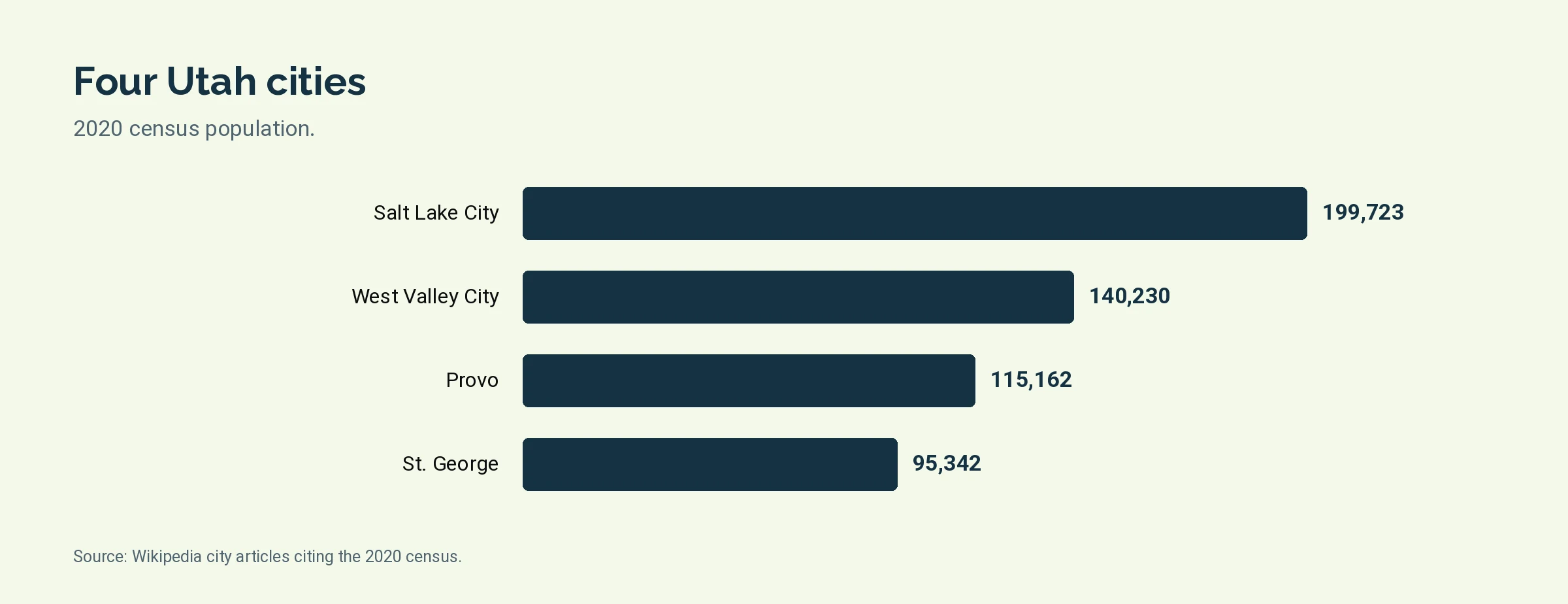
- Salt Lake City. "Personal injury lawyer salt lake city" gets about 250 searches a month in the United States, with an Ahrefs difficulty score of 59 out of 100. The city has 199,723 residents in a county of 1.19 million, so most clients are in the suburbs.
- Provo and Utah County. A young population around two universities. Family law and criminal defense searches follow.
- St. George. Fast growth and a retirement population. Estate planning searches are stronger here.
See our pages for Salt Lake City, Provo, and St. George.
What should a Utah firm check this month?
- Is every claim on the site true and not misleading as written?
- Do case results have context?
- If you share fees with a nonlawyer, is it authorized and disclosed in writing?
- Does your family law content explain what an attorney adds?
- Do location pages name a real office?
The Local SEO program starts at $850/mo per location. It needs a verified Google Business Profile at a real physical address, at least 10 reviews, and a rating of 3.5 stars or better. See the Local SEO services page and the packages page. For the state as a whole, see local SEO in Utah.
Other search services for law firms
- Digital marketing for law firms: the hub for every service
- SEO for law firms: content, technical work and links beyond the map
- AEO | GEO for law firms: being named in AI answers
- SEO content for law firms: service, area and FAQ pages
These three are national pages. For the wider picture in this market, see SEO services in Utah.
Common questions about law firm SEO in Utah
Does Utah still have lawyer advertising rules?
One. Rule 7.1 bars false or misleading communications and coercion, duress, or harassment. Rules 7.2 through 7.5 were repealed in 2020.
Can a Utah lawyer share fees with a nonlawyer?
Yes, if the arrangement is authorized under Utah Supreme Court Standing Order No. 15 and the client receives written notice. Check the current rule.
What is a licensed paralegal practitioner?
A non-attorney licensed by the Utah State Bar to help clients in family law, eviction, and small debt matters.
Is the Utah legal sandbox still open?
Its website says it is authorized through August 14, 2027 and is no longer accepting applications.
How long does local SEO take for a Utah firm?
First map grid movement usually shows in 1 to 3 weeks. Reaching the top 3 on competitive terms takes 30 to 90 days, depending on reviews and nearby competition.