
☰
All servicesLocal SEOGBP managementAEO | GEOSEO contentTechnical SEOLink buildingDesign & CROPPC managementIndustriesLaw firmsHome servicesPlumbersHVACElectriciansRoofersMedical practicesOrthopedicsPhysical therapyDental practicesGeneral dentistsOrthodontistsPeriodontistsEndodontistsRestaurants and coffee shopsTour operatorsAuto repair shopsLocationsPennsylvaniaState CollegeBellefonteAltoonaWilliamsportLock HavenLewistownPhiladelphiaPittsburghAllentownHarrisburgNew YorkNew York CityBuffaloRochesterAlbanyTexasHoustonDallasSan AntonioAustinUtahSalt Lake CityProvoSt. GeorgeConnecticutBridgeportNew HavenHartfordStamfordOhioColumbusClevelandCincinnatiWashingtonSeattleSpokaneTacomaNevadaLas VegasRenoHendersonPackagesAboutResourcesArticles
Home / Locations / Connecticut / Law firms / Local SEO
Local SEO for law firms in Connecticut
Quick summary: Law firm SEO in Connecticut has two state-specific layers: Rule 7.2 of the Rules of Professional Conduct, and a Practice Book section that requires many advertisements to be filed with the Statewide Grievance Committee. Galli Local is based in Bellefonte, Pennsylvania, and works with Connecticut businesses remotely. The general method is on our law firm SEO page.
What local SEO covers for law firms in Connecticut
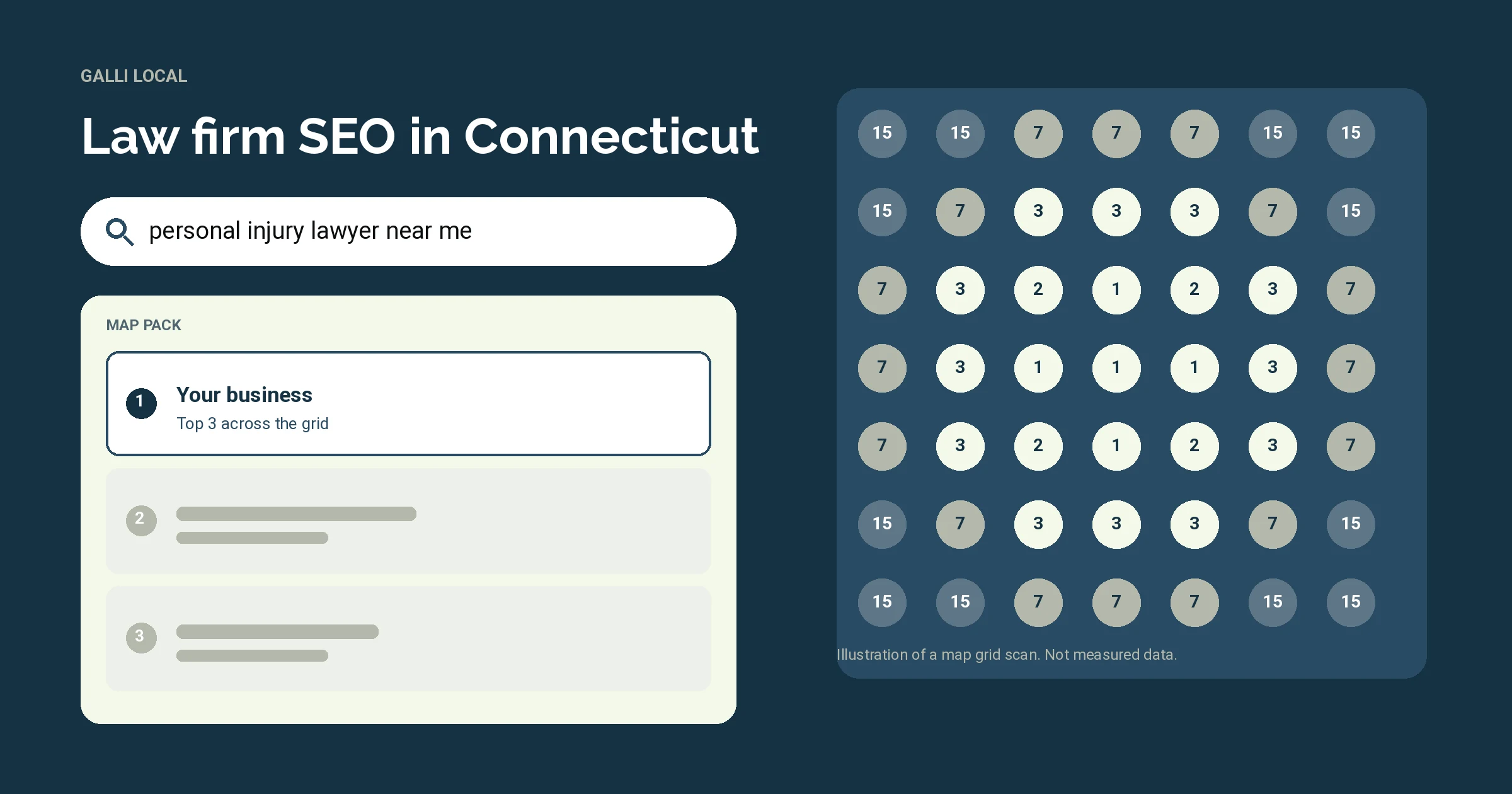
Local SEO for law firms in Connecticut is four jobs done every month: managing the Google Business Profile, earning and answering reviews, cleaning up citations and directory listings, and tracking rank on a map grid. In Connecticut, this page adds the local detail: the rule on filing ads with the Statewide Grievance Committee, three-year ad retention, and the state's 13 judicial districts. The method itself, including categories, review rules and the directories that matter, is on our local SEO for law firms page. The Local SEO program starts at $850/mo per location and needs a verified profile at a real address, at least 10 reviews and a 3.5-star or better rating.
What do Connecticut's rules require of a law firm's advertising?
Five points come up in SEO work. We read them from a published copy of the rules, not the Judicial Branch site, so confirm each against the official Practice Book.
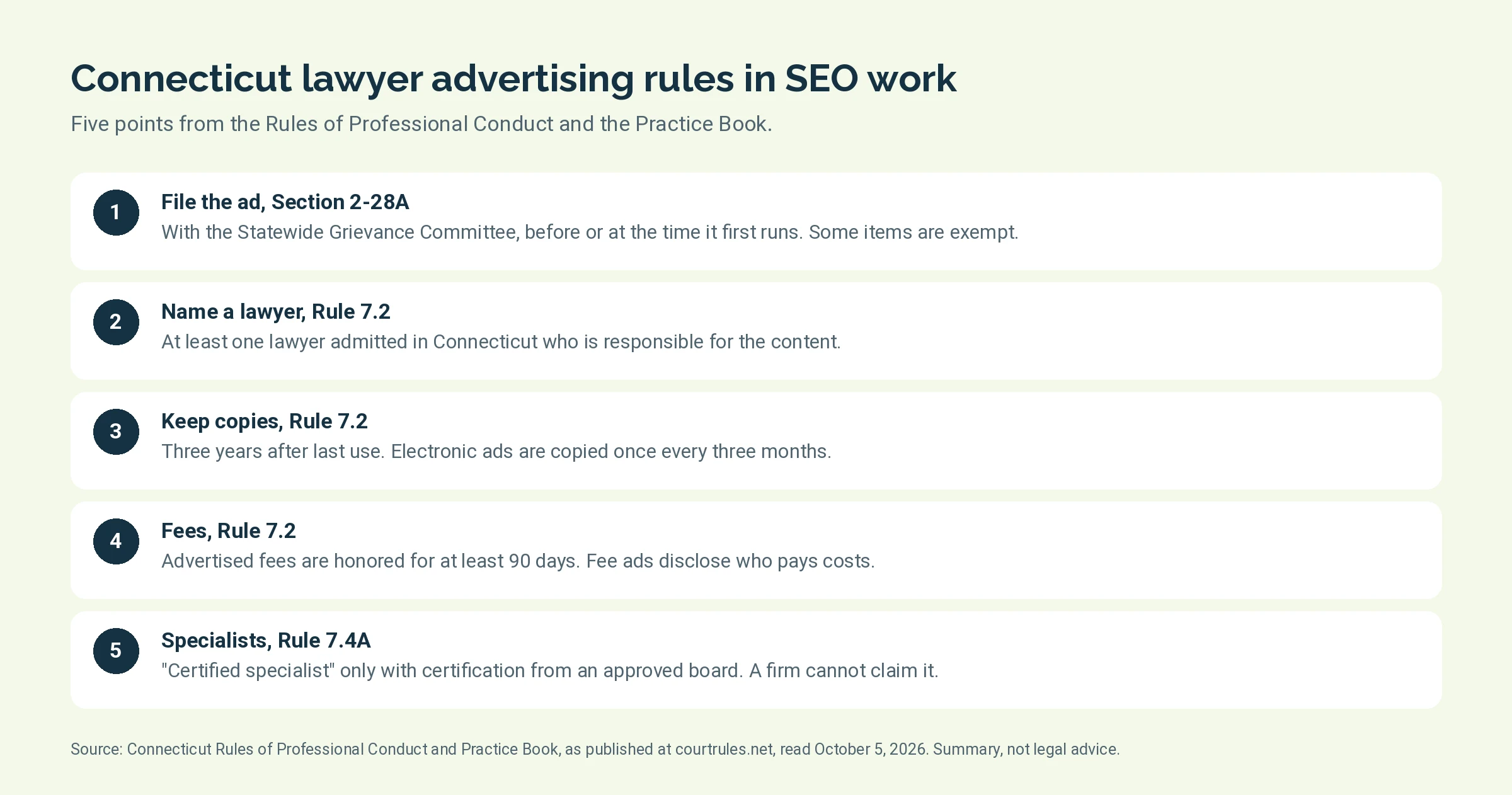
The website exemption is narrow in practice. Website content is on the exempt list, but a paid search ad, a display ad, or a video that points to the site is its own advertisement. Ask whoever runs your ads whether each one has been filed.
Quarterly copies. Save a full copy of the site and any running ads every three months, with dates. That satisfies the electronic retention point and gives you a record if a complaint is ever made.
Personal injury firms have a waiting period on direct outreach. Rule 7.3 bars written solicitation about a personal injury or wrongful death matter until more than 40 days after the accident. SEO is not solicitation, because the client comes to you. Email or mail campaigns to accident victims are another matter.
Fee disclosures in matching type. If "No fee unless we win" is in large type, the line about who pays costs has to match it.
This is a summary, not legal advice. Read the current rule before you publish.
How do Connecticut's legal markets differ?
Connecticut's courts are organized into 13 judicial districts, not by county. The state has eight counties on the map, and county government was abolished in 1960. Clients do not think in counties here. They think in towns and in the courthouse they have been told to go to.
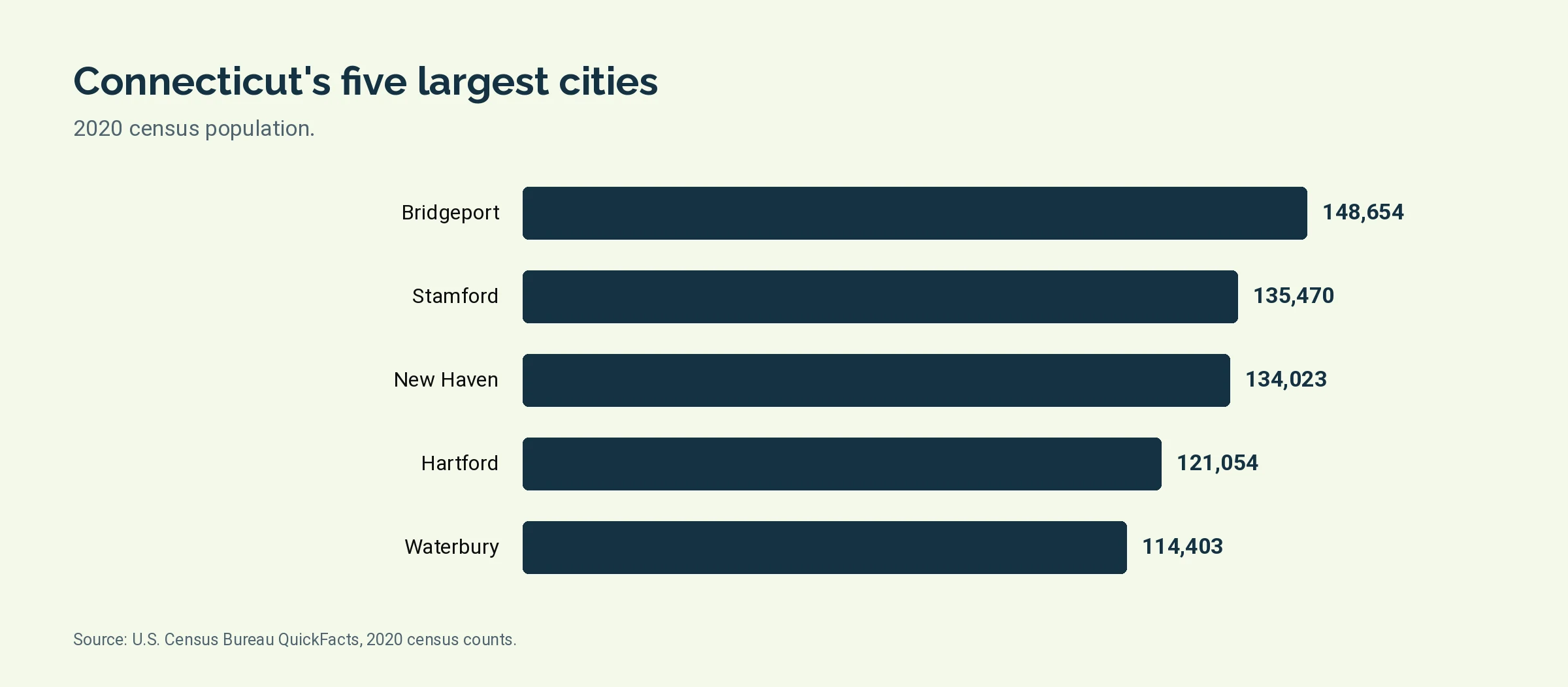
- Bridgeport, Stamford, New Haven, Hartford, Waterbury. The five largest cities each had between 114,000 and 149,000 residents in 2020. None dominates the state, and each anchors a judicial district.
- Stamford and lower Fairfield County. Close to New York, with New York firms advertising across the line. Rule 7.2 requires a responsible lawyer admitted in Connecticut.
- Hartford. "Personal injury lawyer hartford ct" gets about 150 searches a month in the United States, with a difficulty score of 4 out of 100.
Write location pages by town and name the judicial district courthouse that serves it.
What should a Connecticut firm check this month?
- Has each paid ad been filed, or confirmed exempt?
- Does every page name a responsible lawyer admitted in Connecticut?
- When was the last dated copy of the site saved?
- Do fee statements disclose costs in matching type?
- Does any page call the firm a specialist?
The Local SEO program starts at $850/mo per location. It needs a verified Google Business Profile at a real physical address, at least 10 reviews, and a rating of 3.5 stars or better. See the Local SEO services page and the packages page. For the state as a whole, see local SEO in Connecticut.
Other search services for law firms
- Digital marketing for law firms: the hub for every service
- SEO for law firms: content, technical work and links beyond the map
- AEO | GEO for law firms: being named in AI answers
- SEO content for law firms: service, area and FAQ pages
These three are national pages. For the wider picture in this market, see SEO services in Connecticut.
Common questions about law firm SEO in Connecticut
Do Connecticut law firms have to file their ads?
Many, yes. Practice Book section 2-28A requires filing with the Statewide Grievance Committee, with exemptions that include the contents of a firm's website. Confirm against the official rule.
How long must a Connecticut firm keep its ads?
Three years after the last dissemination under Rule 7.2. Electronic advertisements are copied once every three months.
Does Connecticut organize its courts by county?
No. The Superior Court is organized into 13 judicial districts. County government was abolished in 1960.
Can a Connecticut firm call itself a specialist?
No. Only an individual lawyer currently certified by an approved board may claim to be a certified specialist.
How long does local SEO take for a Connecticut firm?
First map grid movement usually shows in 1 to 3 weeks. Reaching the top 3 on competitive terms takes 30 to 90 days, depending on reviews and nearby competition.