
☰
All servicesLocal SEOGBP managementAEO | GEOSEO contentTechnical SEOLink buildingDesign & CROPPC managementIndustriesLaw firmsHome servicesPlumbersHVACElectriciansRoofersMedical practicesOrthopedicsPhysical therapyDental practicesGeneral dentistsOrthodontistsPeriodontistsEndodontistsRestaurants and coffee shopsTour operatorsAuto repair shopsLocationsPennsylvaniaState CollegeBellefonteAltoonaWilliamsportLock HavenLewistownPhiladelphiaPittsburghAllentownHarrisburgNew YorkNew York CityBuffaloRochesterAlbanyTexasHoustonDallasSan AntonioAustinUtahSalt Lake CityProvoSt. GeorgeConnecticutBridgeportNew HavenHartfordStamfordOhioColumbusClevelandCincinnatiWashingtonSeattleSpokaneTacomaNevadaLas VegasRenoHendersonPackagesAboutResourcesArticles
Home / Industries / Home services / SEO
SEO for home service companies
Quick summary: SEO for a home service company is the work on the whole website, so that each trade you offer has pages that rank, load fast on a phone and turn a visit into a booked job. Local SEO is the narrower job of getting your Google listing into the map pack. A company with one trade and one town can often stop at local SEO. A company with plumbing, HVAC and electrical under one roof needs the full site built to carry all three.
What does SEO cover for a home service company?
The service itself is described on the SEO services page. This page covers what changes when the client runs trucks.
How do homeowners search beyond the map pack?
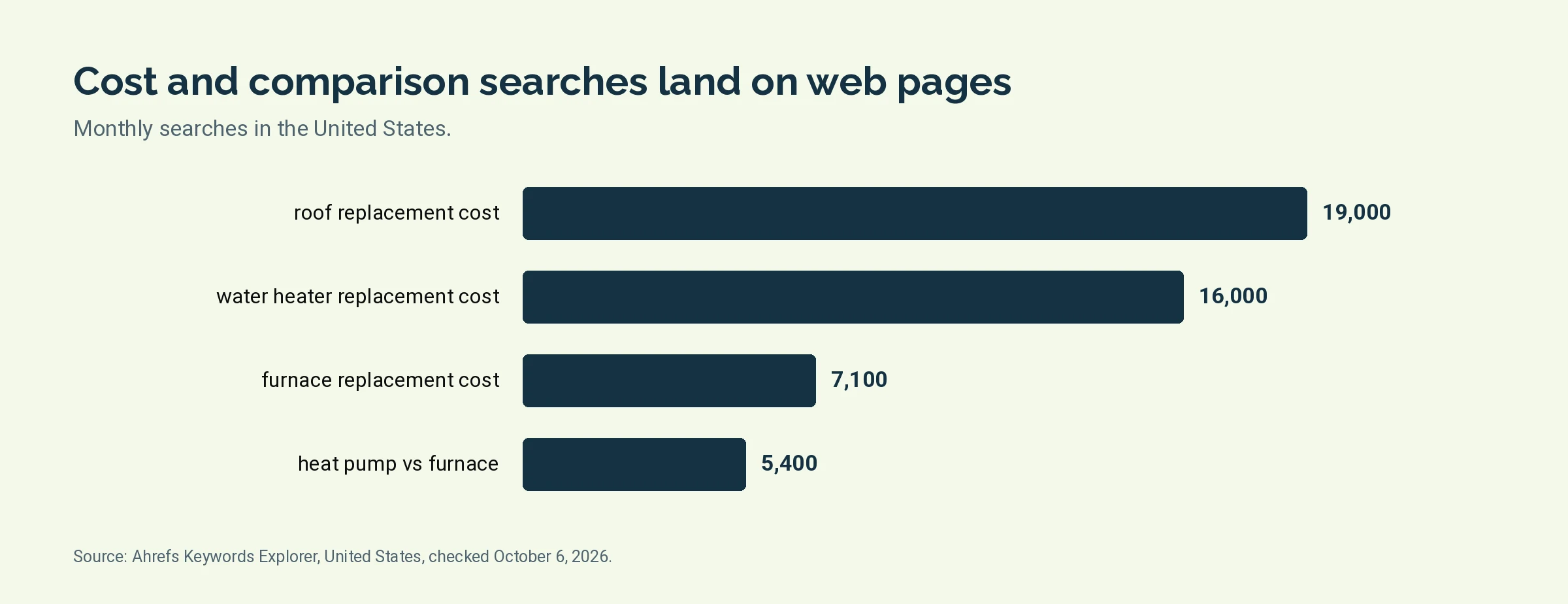
Urgent searches go to the map. Everything else lands on a web page: price checks, repair-or-replace decisions, and searches for a specific job in a specific town.
Source: Ahrefs Keywords Explorer, United States, checked October 6, 2026.
Two things stand out. First, the category term is tiny. "Home services near me" gets about 800 searches a month in the United States, against about 462,000 for "plumber near me". A site organized around "our home services" is organized around a phrase almost nobody types.
Second, the cost searches are large and they are the high-ticket jobs. Someone searching "water heater replacement cost" is a few days from spending real money. In practice, a cost page with honest ranges and the factors behind them is the most useful page a home service site can add, and it is one many companies avoid because they do not want to publish numbers.
How should a multi-trade site be structured?
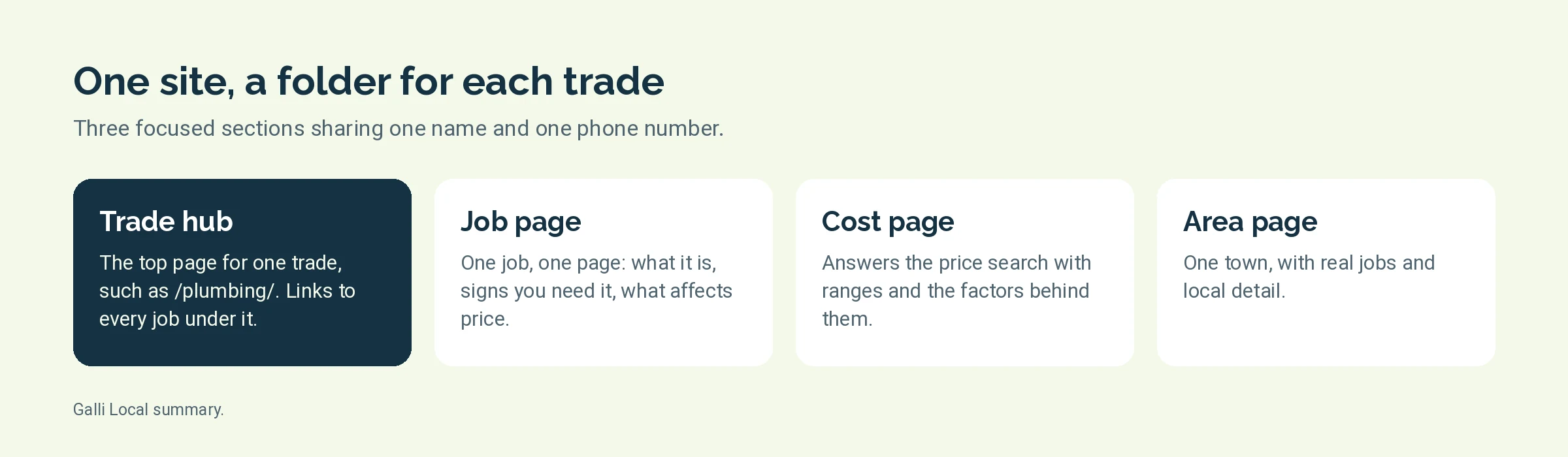
Give each trade its own folder, and put the jobs under it. A company that does plumbing, HVAC and electrical should look like three focused sites sharing one name, one phone number and one set of reviews.
A common mistake is one "Services" page with a paragraph for each of 20 jobs. Google has nothing specific to rank, and the map listing has no page to point at for "drain cleaning" or "panel upgrade". The second common mistake is the reverse: 300 trade-and-town pages made by swapping names. The SEO content page covers how to avoid both.
Each trade has its own SEO page here with its own keyword set: SEO for plumbers, SEO for HVAC companies, SEO for electricians and SEO for roofers.
Which technical points matter most?
Schema types. Schema.org has a type called HomeAndConstructionBusiness, with more specific types under it that include Plumber, HVACBusiness, Electrician, RoofingContractor and GeneralContractor. Google's structured data documentation says to use the most specific LocalBusiness type you can. A single-trade company picks its trade. A multi-trade company has a choice to make: we usually mark up the company with the type that matches its main trade and describe the other trades as services, so the markup agrees with the primary category on the Business Profile.
Booking and dispatch tools. Many companies run online booking through field service software such as ServiceTitan, Housecall Pro or Jobber. Check how the booking widget loads. A script that blocks the page for three seconds costs you the customer with water on the floor.
Speed on a phone. Urgent searches happen on phones, often on a weak signal. The click-to-call button should be visible without scrolling and should work before the large photos finish loading.
Call tracking. If you use tracking numbers, keep your real number as the one in your schema and on your listings. A tracking number that leaks into directories creates the mismatched listings that hurt map rankings.
Where do links come from for a home service company?
Real links in this industry come from places that already know you:
- Trade associations. Plumbing-Heating-Cooling Contractors Association (PHCC), Air Conditioning Contractors of America (ACCA), National Electrical Contractors Association (NECA), Independent Electrical Contractors (IEC), National Roofing Contractors Association (NRCA), and the National Association of the Remodeling Industry (NARI). Several run a public contractor finder, and many have state or local chapters.
- Manufacturer dealer locators. If you are an authorized dealer for an equipment brand, the brand's "find a dealer" page should list you and link to you.
- Suppliers and distributors. Some list the contractors they sell to.
- Home service directories. Angi, HomeAdvisor, Thumbtack, Houzz, Nextdoor, Yelp and the Better Business Bureau.
- Local sources. The chamber of commerce, the local home builders association, youth teams you sponsor, and local news when you do something worth covering.
Which rules apply to a home service website?
This is a summary, not legal advice.
- Licensing is state and local. Requirements differ by state, by trade and sometimes by city. Publish the license or registration numbers you hold, call each one by its correct name, and never claim one you do not have. Check whether your state requires the number in advertising.
- Reviews. The Federal Trade Commission's Consumer Reviews and Testimonials Rule bans fake reviews and bans incentives tied to a review of a particular sentiment, positive or negative. It also covers reviews by company insiders and their relatives that do not disclose the connection.
- Sales made in the home. The FTC's Cooling-Off Rule gives a buyer three business days to cancel many sales made at the buyer's home, and requires the seller to hand over a cancellation form.
- Local Services Ads. Google screens advertisers before ads run. Its published requirements list license and insurance checks and a verified Business Profile, with background checks that vary by trade.
What about the Business Profile, reviews and citations?
Those belong to local SEO and have their own page. In short: one profile per real location, a primary category that matches the trade you most want, and the same name, address and phone number on every directory. See local SEO for home service companies.
Is full SEO a good fit?
It is a good fit if you:
- Offer two or more trades, or serve several towns, and the site has one page for all of it
- Already rank on the map for your main trade and want the others to catch up
- Sell high-ticket replacements that people research first
- Can wait 3 to 6 months for steady organic gains
It is not a fit if you:
- Have fewer than 10 reviews or an unverified profile. Fix that first
- Need calls this week. Ads bring leads from the day campaigns go live
- Want a set of pages written with nothing else. Content is not sold on its own
SEO for a multi-trade company sits in the full agency stack. Current options are on the packages page, and the overview for this industry is the home service companies hub.
Common questions about SEO for home service companies
What is the difference between SEO and local SEO for a home service company?
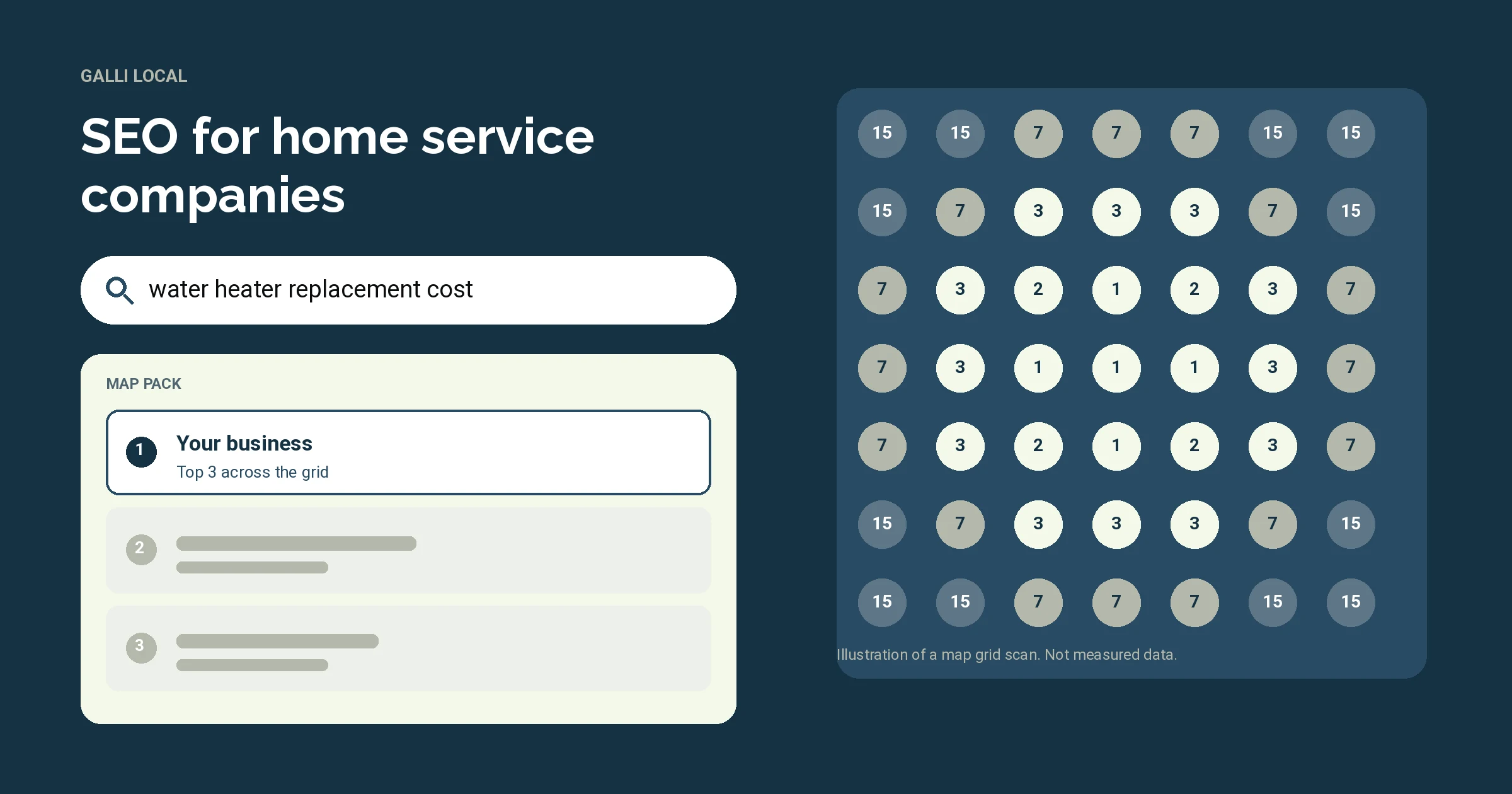
Local SEO works on your Google Business Profile and listings to win the map pack. SEO works on the website itself: pages, structure, speed, schema and links. The map pack wins urgent calls, and the website wins cost and comparison searches.
Should a multi-trade company have one website or several?
One website. A single domain with a folder for each trade keeps every link and every page working for one name. Separate sites start from zero and compete with each other.
How many pages does a home service site need?
One page for each job you want to be hired for, plus a page for each town that matters. A three-trade company can need dozens of job pages before area pages are counted.
Should we publish prices on the website?
Publish ranges and the factors that move them, if you can stand behind them. Cost searches are some of the largest in the industry, and a page with no numbers does not answer them.
How long does SEO take for a home service company?
SEO content takes 3 to 6 months for steady gains. Map grid movement usually comes first, in 1 to 3 weeks, because listing work takes effect faster than new pages.
Which schema type should a plumbing and HVAC company use?
Use the type for your main trade, such as Plumber or HVACBusiness, and describe the other trades as services. Both are real schema.org types under HomeAndConstructionBusiness.