
☰
All servicesLocal SEOGBP managementAEO | GEOSEO contentTechnical SEOLink buildingDesign & CROPPC managementIndustriesLaw firmsHome servicesPlumbersHVACElectriciansRoofersMedical practicesOrthopedicsPhysical therapyDental practicesGeneral dentistsOrthodontistsPeriodontistsEndodontistsRestaurants and coffee shopsTour operatorsAuto repair shopsLocationsPennsylvaniaState CollegeBellefonteAltoonaWilliamsportLock HavenLewistownPhiladelphiaPittsburghAllentownHarrisburgNew YorkNew York CityBuffaloRochesterAlbanyTexasHoustonDallasSan AntonioAustinUtahSalt Lake CityProvoSt. GeorgeConnecticutBridgeportNew HavenHartfordStamfordOhioColumbusClevelandCincinnatiWashingtonSeattleSpokaneTacomaNevadaLas VegasRenoHendersonPackagesAboutResourcesArticles
Home / Industries / HVAC / SEO
SEO for HVAC companies
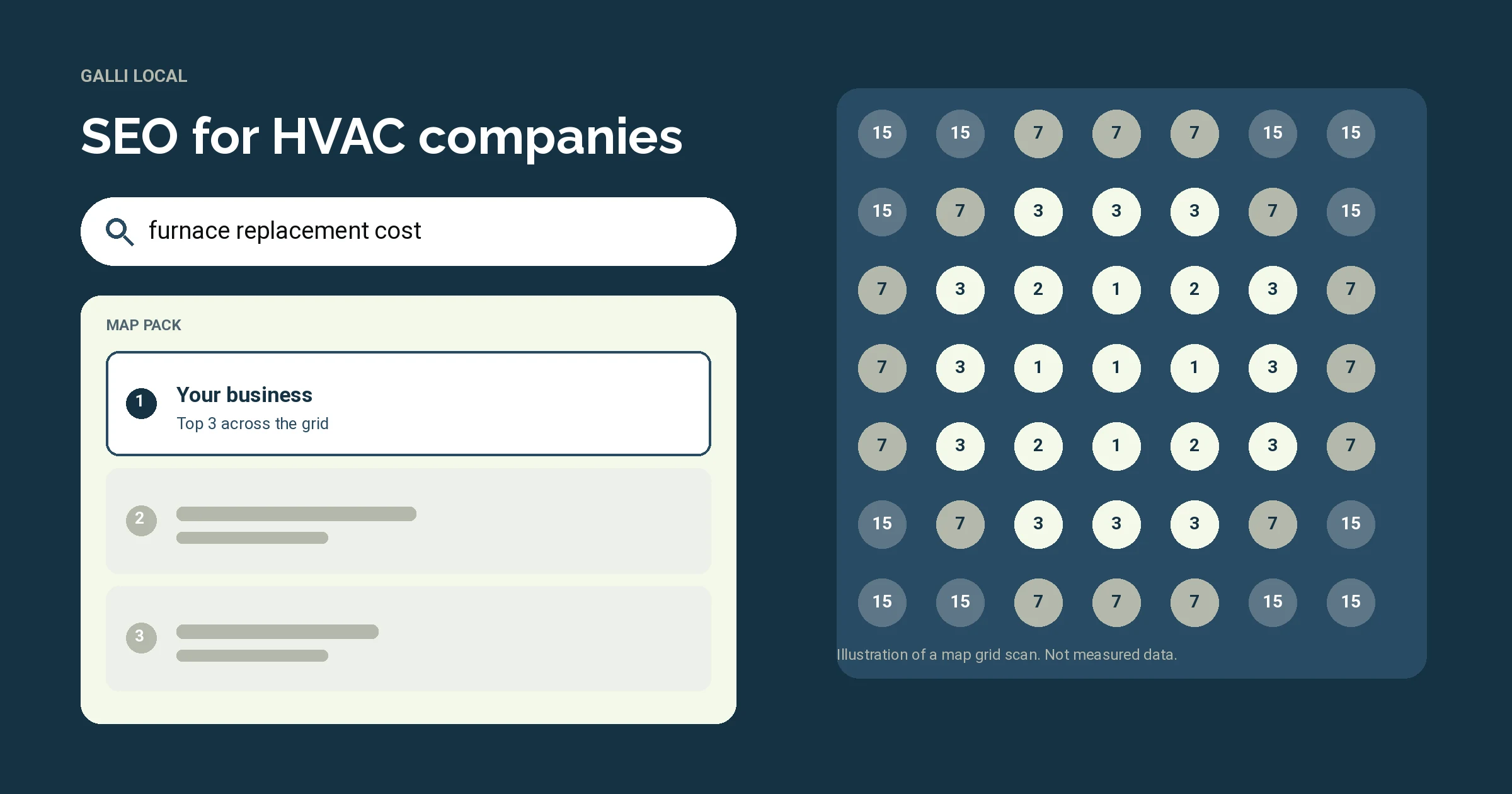
Quick summary: SEO for an HVAC company is all the work that gets your website found, read and acted on: pages, site health, links, AI visibility and a quote form that works on a phone. Local SEO is one part of it and covers the map pack. This page covers the rest, which is where replacement and installation quotes come from.
What does SEO cover for an HVAC company?
The national version of this service is on the SEO page. What follows is specific to heating and cooling.
How do homeowners search beyond the map pack?
Repair is urgent. Replacement is not. A homeowner who has just been told the compressor is gone will spend days reading about cost, brands, financing and whether to switch to a heat pump. Those searches show standard results and AI answers, and they land on web pages.
Source: Ahrefs Keywords Explorer, United States, checked October 6, 2026.
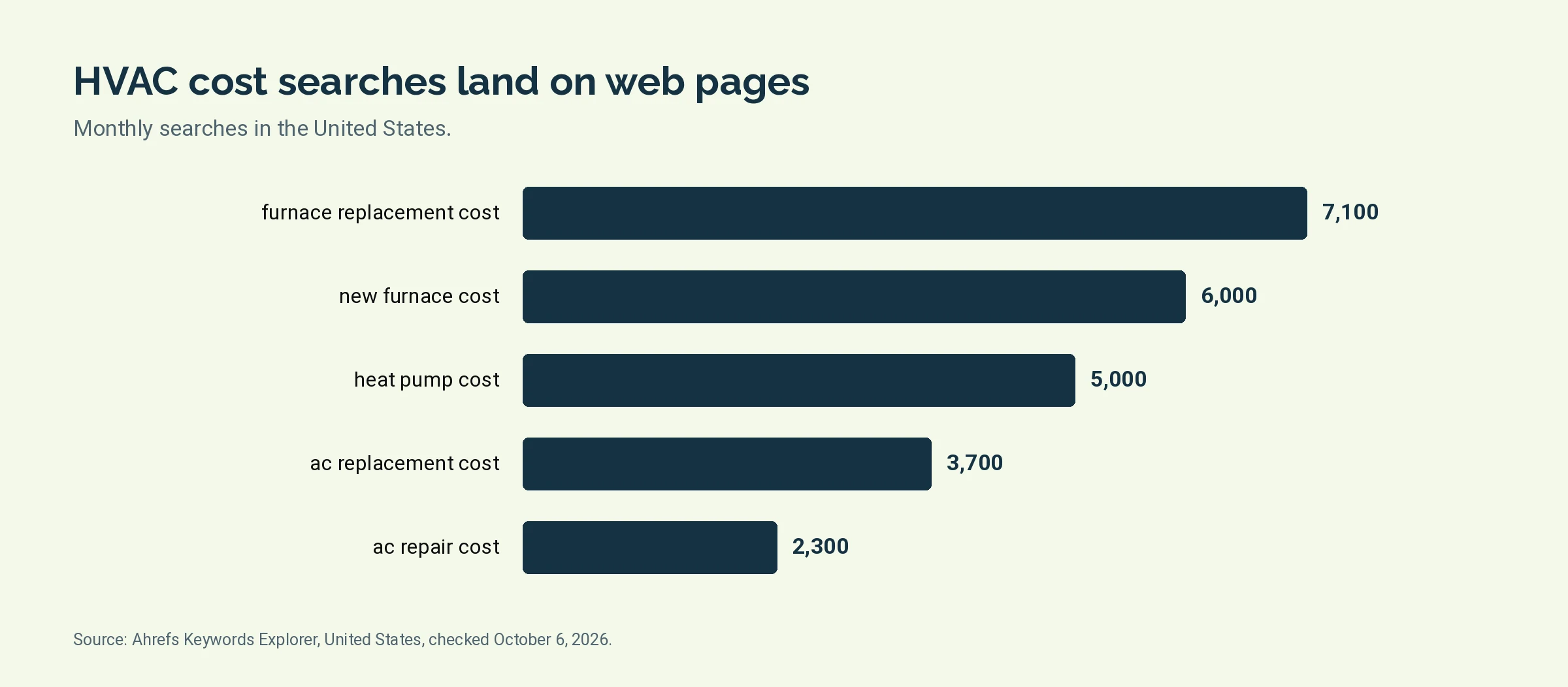
Two things stand out. Cost searches are large and most HVAC sites have no cost page at all. And the national numbers are only a guide to demand: in your town the same searches happen in smaller numbers.
First Page Sage reports that the first organic result gets 7.1% of clicks across all searches and 22.6% when no AI answer shows, while the tenth gets 0.5%. A cost page stuck at the bottom of page one is close to invisible.
Which pages does an HVAC website need?
Price pages do not need to publish a fixed price. A range, the factors that move it (system size, ductwork, fuel type, efficiency rating) and a clear route to a written quote are enough to rank and to earn the form fill. How each page gets written is on the SEO content page.
Seasonality: when does the work have to happen?
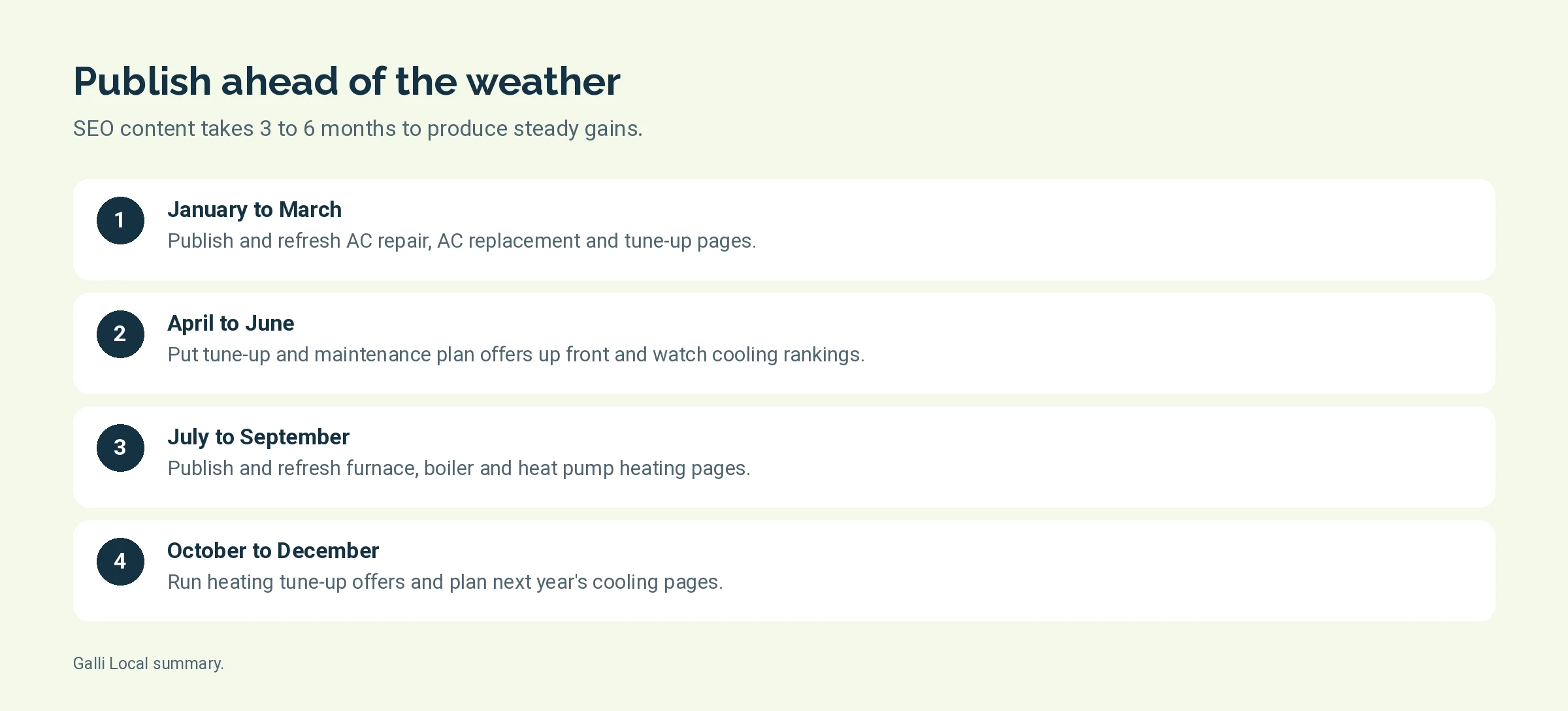
Search demand for cooling and heating trades places twice a year. SEO content takes 3 to 6 months to produce steady gains, so the calendar runs ahead of the weather:
- January to March: publish and refresh AC repair, AC replacement and tune-up pages.
- April to June: tune-up and maintenance plan offers on the home page; watch cooling rankings weekly.
- July to September: publish and refresh furnace, boiler and heat pump heating pages.
- October to December: heating tune-up offers; plan next year's cooling pages.
Ads fill the gap when weather arrives before rankings do, because ads bring leads from the day campaigns go live.
Technical points specific to HVAC sites
- Schema. Schema.org has a dedicated HVACBusiness type, a kind of LocalBusiness under HomeAndConstructionBusiness. Use it on the home and contact pages with your name, address, hours and service area, and add Service and FAQPage markup on the pages that fit. The LocalBusiness schema starter pack has templates.
- Booking and dispatch tools. Scheduling widgets from field service software can load slowly or sit in a frame that search engines read poorly. Keep a plain phone link and a short native form on every page, and treat the widget as an extra.
- Mobile speed. Emergency searches happen on a phone, often in a hot or cold house. Large hero videos, chat pop-ups and stacked tracking scripts all slow the page down.
- Duplicate city pages. Many HVAC sites carry dozens of town pages with one paragraph changed. Google treats near-identical pages as one and ignores the rest.
- Old offer pages. Expired rebate, tax credit and coupon pages should be updated or redirected each season. The IRS instructions for Form 5695 say the energy efficient home improvement credit cannot be claimed for property placed in service after December 31, 2025, so a page that still promotes it for new installs is out of date. Every incentive page needs a date and an official source.
Where do links come from for an HVAC company?
- Manufacturer dealer locators. Carrier, Trane and Lennox each list authorized dealers. If you qualify, make sure your listing exists and points to the right page.
- Trade and certification bodies. The Air Conditioning Contractors of America (ACCA) runs a Find a Contractor directory. North American Technician Excellence (NATE) has a tool for finding contractors with NATE-certified technicians.
- Utilities and efficiency programs. Some utilities publish lists of participating contractors for their rebate programs. Ask yours. ENERGY STAR has a Rebate Finder that shows homeowners offers by zip code.
- Directories homeowners use. Angi, Thumbtack, Yelp and the Better Business Bureau.
- Local sources. Suppliers and distributors, the chamber of commerce, home builder associations, youth sports sponsorships and local press, especially stories about heat waves, cold snaps and energy bills.
Listing accuracy and review work belong to local SEO. In short: the same name, address and phone number everywhere, and a steady flow of reviews. The detail is on the local SEO page.
Which rules apply to HVAC marketing?
- EPA Section 608. The EPA requires certification for technicians who maintain, service, repair or dispose of equipment that could release refrigerants. The EPA says the credential does not expire. If your site says "EPA-certified technicians", it should be true of each tech who handles refrigerant.
- Refrigerant transition. The EPA's Technology Transitions rules set a global warming potential limit of 700 for new residential air conditioning and heat pump systems, with compliance dates that began January 1, 2025. Pages that describe refrigerants should match the current rule.
- State and local licensing. The U.S. Bureau of Labor Statistics says some states and localities require HVAC technicians to be licensed. Some states also require the license number in advertising: California's Contractors State License Board says licensed contractors must include it in all forms of advertising, websites included. In Pennsylvania, the Attorney General's office says contractors who do at least $5,000 of home improvement work a year must register under the Home Improvement Consumer Protection Act. Check your own state's board.
- Advertising claims. The Federal Trade Commission says advertising must be truthful, and advertisers must have evidence to back up their claims. That covers energy savings percentages, "lowest price" and "same-day service".
We flag claims we cannot support during editing. Legal questions go to your attorney or licensing board.
Is full SEO a good fit?
Good fit:
- You install and replace systems, and want more quote requests
- The map pack already brings repair calls, or local SEO is in progress
- You can supply job photos, brands, plan details and financing terms
- You can plan a season ahead, since content takes 3 to 6 months for steady gains
Not a fit:
- You need calls this week and nothing else (ads are faster)
- You have no verified Google Business Profile yet (start there)
- You want 40 town pages with the town name swapped
- You want a ranking promise in writing
Back to the HVAC marketing hub, or see how this fits the wider home services SEO page.
Questions HVAC owners ask about SEO
Which HVAC searches does the map pack not cover?
Cost, comparison and financing searches. "Furnace replacement cost" and "heat pump vs furnace" show standard results and AI answers, so they are won by pages on your website. Repair searches with "near me" stay with the map pack and local SEO.
How long does HVAC SEO take?
SEO content usually takes 3 to 6 months to produce steady gains. Map grid movement from local SEO comes sooner, with first movement in 1 to 3 weeks. Because demand is seasonal, start cooling pages in winter and heating pages in summer.
Do we need a page for each brand we install?
Only for brands you are an authorized dealer for and install often. Brand comparison searches are small ("carrier vs trane" gets about 600 a month, per Ahrefs), but the people making them are choosing a system. A brand page should list the models you install and match your listing on the manufacturer's dealer locator.
What does HVAC SEO cost?
The Local SEO program starts at $850 a month per location. Full SEO is part of the full agency stack, and the packages page lists what each option includes. Agreements start with a three-month term, then run month to month.
Can SEO replace Google Ads for HVAC?
Not fully. SEO builds lasting visibility for repair, cost and replacement searches, while ads cover sudden weather spikes and new service areas where you do not rank yet. Many HVAC companies run both and shift ad budget down as rankings grow.